← AP Prep

AP World History Practice Test

Instructions: This free practice test has 16 multiple-choice questions from our full-length AP World History practice tests. You will have 16 minutes, the same pace as the real exam.

It runs in the same test engine as our full-length tests: you can mark questions for review, cross out choices and move back and forth until time expires. When you finish, you will see every answer with a full explanation. No account needed.

Or

Go Back

All 16 questions, with answers

Every question in this AP World History practice test is below. The answer and its explanation stay closed until you open them, so you can work each one first.

Question 1

After the abolition of slavery in many European colonies, plantation employers recruited workers from India and China under labor contracts. Indian laborers traveled to destinations including Mauritius, British Guiana and Trinidad, while Chinese workers also entered plantation economies such as Cuba. Contracts promised wages and eventual release from service, but penalties for leaving employment and coercive recruitment often restricted workers’ freedom. These migrations supplied labor to export plantations and created lasting Asian diaspora communities.

Original historical analysis of nineteenth-century indentured labor migration.

Which of the following best describes how indentured labor migration was connected to the broader economic transformations of the nineteenth century?
  • AIndustrial employers recruited European artisans for short visits to Asian workshops
  • BGovernments restored hereditary serfdom to prevent laborers from leaving estates
  • CPlanters replaced export crops with subsistence farming to reduce labor demands
  • DPlantation employers sought Asian contract labor after the abolition of slavery
Show answer and explanation

Answer: D

A is incorrect: The passage concerns Asian workers entering plantations, not European technical specialists. B is incorrect: Indenture involved contracts and migration rather than restoration of hereditary serfdom. C is incorrect: Employers continued export plantations and recruited labor for them. D is correct: Contract migration supplied workers to plantation economies after slavery’s abolition while creating diaspora communities.
Question 2

"We, the people of this nation, having achieved our independence from colonial rule, do hereby establish this constitution to secure for ourselves and our descendants the blessings of liberty, justice, and equality. The government shall be organized upon democratic principles, with power vesting in the people through their elected representatives. The rights of all citizens, regardless of tribe, religion, or gender, shall be protected under the law. The natural resources of this nation shall be used for the benefit of all its people."

Original passage written in the style of a constitutional preamble for an African state gaining independence, c. 1960.

Which of the following best describes the historical context for the political developments described in the passage?
  • AThe negotiation of commercial privileges by European chartered companies
  • BThe establishment of independent states through postwar decolonization
  • CThe unification of European kingdoms into nineteenth-century nation-states
  • DThe redistribution of African colonies after the First World War
Show answer and explanation

Answer: B

A is incorrect: The passage declares independence, not privileges for chartered companies. B is correct: A c.1960 constitution rejecting colonial rule belongs to the wave of independence after World War II. C is incorrect: The setting is African decolonization rather than European national unification. D is incorrect: Redistribution after 1918 generally continued colonial rule, unlike this declaration.

Questions 3 to 4

Source 1 — Original historical analysis of changes in health after 1900.

Improved sanitation, vaccination and medical treatment reduced deaths from many infections and helped more people survive to older ages. In many populations, chronic conditions such as heart disease and diabetes consequently became a larger part of the burden of illness. Longer lives, together with changes in diet and activity, altered the diseases that health systems had to address.

Source 2 — Original historical analysis of uneven health outcomes after 1900.

The growing importance of chronic illness did not mean that infectious disease had disappeared. Poorer communities often lacked clean water, adequate nutrition or access to treatment, and could face infections and chronic conditions at the same time. International trade and travel also carried infections across borders. Health improvements depended on the distribution of resources as well as the discovery of new treatments.

Two original historical analyses of health after 1900, written for this practice exam.

Question 3

Which statement best describes the relationship between the two analyses?
  • ASource 1 treats population growth as the cause of epidemics, while Source 2 emphasizes migration restrictions.
  • BSource 1 argues that infections disappeared, while Source 2 attributes their return to industrial decline.
  • CSource 1 emphasizes religious explanations of disease, while Source 2 favors inherited medical traditions.
  • DSource 1 explains a shift toward chronic illness, while Source 2 emphasizes overlapping and unequal burdens.
Show answer and explanation

Answer: D

A is incorrect: Source 1 discusses longer lives and changing disease burdens, not population growth causing epidemics; Source 2 does not advocate migration restrictions. B is incorrect: Source 1 describes fewer deaths from many infections rather than their disappearance; Source 2 discusses unequal resources rather than industrial decline. C is incorrect: Both analyses concern material conditions and medical changes rather than this contrast in religious or traditional explanations. D is correct: Source 1 emphasizes changing disease burdens as more people live longer; Source 2 qualifies that pattern by emphasizing persistent infections and unequal access to resources.

Question 4

Which comparison best places the international spread of infections described in Source 2 in historical context?
  • ALong-distance connections mattered for medieval epidemics but ceased to matter with modern medicine
  • BTrade and travel could spread infections in both eras, despite differences in pathogens and treatment
  • CMedieval and modern epidemics spread through identical transport systems and social institutions
  • DHistorical epidemics affected mobile elites while modern infections are restricted to settled populations
Show answer and explanation

Answer: B

A is incorrect: The passage states that modern travel and trade can transmit infections. B is correct: Connectivity helped disease spread historically and still does, while medical knowledge and specific mechanisms changed. C is incorrect: Modern transportation and medicine differ greatly from medieval institutions. D is incorrect: Neither period’s diseases were confined to these proposed social groups.

Question 5

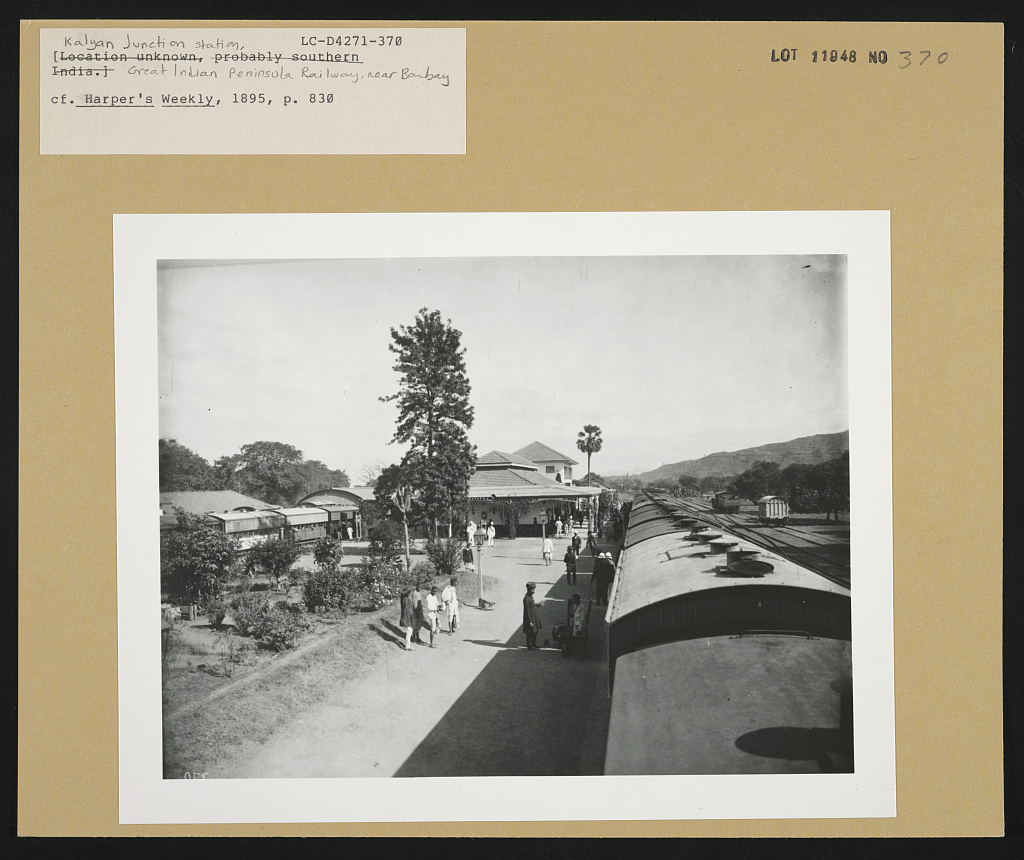
A mounted black-and-white photograph shows a railway platform with people beside passenger carriages at right. Tracks extend into the distance, and low station buildings and trees stand at left and center. A catalog card above the photograph identifies Kalyan Junction and cites Harper’s Weekly, 1895. No locomotive is clearly visible.
Questions 37–38 refer to the following photograph of Kalyan Junction station on the Great Indian Peninsula Railway, near Bombay (Mumbai), in British-ruled India, 1895.

William Henry Jackson, Kalyan Junction station on the Great Indian Peninsula Railway near Bombay, 1895. Library of Congress, item 2004707348, mounted photographic print.

Which feature of late-nineteenth-century change is directly visible in this photograph?
  • AThe replacement of village farming by urban factory employment
  • BThe transfer of railway ownership from British investors to Indian voters
  • CThe use of railway facilities for transporting people in a colonial setting
  • DThe decline of maritime shipping after inland railways were constructed
Show answer and explanation

Answer: C

Choice A is incorrect. A station photograph does not show the occupational transition of village farmers.

Choice B is incorrect. Ownership and voting arrangements are not visible.

Choice C is correct. People, passenger carriages and platforms directly show facilities for passenger transport in the identified colonial setting.

Choice D is incorrect. No comparison of shipping volumes is provided.

Questions 6 to 8

At this international gathering, advocates bring experiences from factories, farms, schools and households across many countries. Laws that promise equal treatment have not ended barriers to education, pay and public office. By sharing research and organizing across borders, we can hold governments to their commitments. We seek cooperation without assuming that women in every place face the same obstacles or favor the same strategies.

Original speech written in the style of a women’s rights advocate addressing an international conference, c. 1995; not a quotation from a named speaker.

Question 6

Which historical development most directly provided a framework for the advocacy described?
  • APostwar growth of international human-rights institutions
  • BThe restoration of hereditary legal estates in most postcolonial countries
  • CThe replacement of international conferences by isolationist trade policies
  • DThe extension of colonial rule over countries that had gained independence
Show answer and explanation

Answer: A

Choice A is correct. International agreements and institutions offered forums and standards for claims to equal rights.

Choice B is incorrect. Hereditary estates do not explain the rights-based international forum.

Choice C is incorrect. The source describes cooperation rather than an end to international exchange.

Choice D is incorrect. Renewed colonial rule is not the institutional setting of this advocacy.

Question 7

Which action would most closely follow the strategy proposed by the speaker?
  • ALimiting research to one country and withholding it from foreign organizations
  • BReplacing national campaigns with a requirement to follow one uniform cultural practice
  • CSeeking exclusive control of international trade routes
  • DCoordinating research and petitions among organizations in several countries
Show answer and explanation

Answer: D

Choice A is incorrect. Withholding findings conflicts with sharing research across borders.

Choice B is incorrect. The speaker explicitly recognizes differing obstacles and strategies.

Choice C is incorrect. Trade-route control is unrelated to the proposed rights advocacy.

Choice D is correct. Coordinated research and petitions implement the stated strategy of transnational cooperation.

Question 8

What limitation of formal equality does the speaker identify?
  • AWritten laws prevent activists from communicating across borders
  • BLegal equality has removed differences in access to education and employment
  • CLegal commitments can coexist with continuing barriers in everyday life
  • DInternational cooperation requires governments to abolish public education
Show answer and explanation

Answer: C

Choice A is incorrect. The speaker proposes communication and does not identify laws as preventing it.

Choice B is incorrect. This reverses the stated claim that barriers remain.

Choice C is correct. The contrast between promised equal treatment and persistent barriers is explicit.

Choice D is incorrect. No abolition of public education is proposed.

Question 9

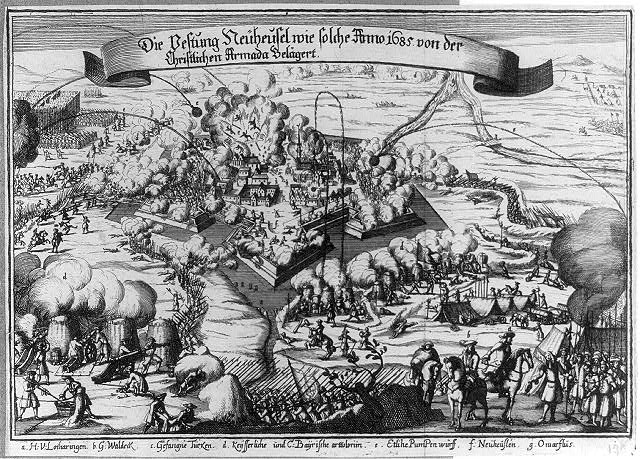
A bird's-eye-view engraving of a siege at a star-shaped fortress. Troops stand in formation, cavalry ride on horseback, and cannons fire from positions surrounding the fortification. Smoke rises from the fortress.
Use the image below to answer questions 14 through 16. The image shows a siege of a fortress in central Europe during the early modern period.

Engraving of Habsburg-led Imperial forces besieging the Ottoman-held fortress of Neuhäusel, 1685. Library of Congress, Prints and Photographs Division.

Which of the following military innovations is most directly depicted in the image?
  • AThe use of gunpowder-based cannon technology to conduct siege warfare against fortified positions
  • BThe development of naval warships armed with heavy artillery for coastal bombardment
  • CThe introduction of mounted archer cavalry tactics adapted from Central Asian steppe traditions
  • DThe construction of defensive fortifications designed to resist infantry assaults without artillery support
Show answer and explanation

Answer: A

The engraving depicts Habsburg-led forces firing cannons at a fortified position, illustrating the use of gunpowder artillery in early modern siege warfare. Ottoman armies also used cannon technology effectively, including in the conquest of Constantinople in 1453. The image shows land-based artillery, rather than naval bombardment, mounted archery, or defenses operating without artillery.

Question 10

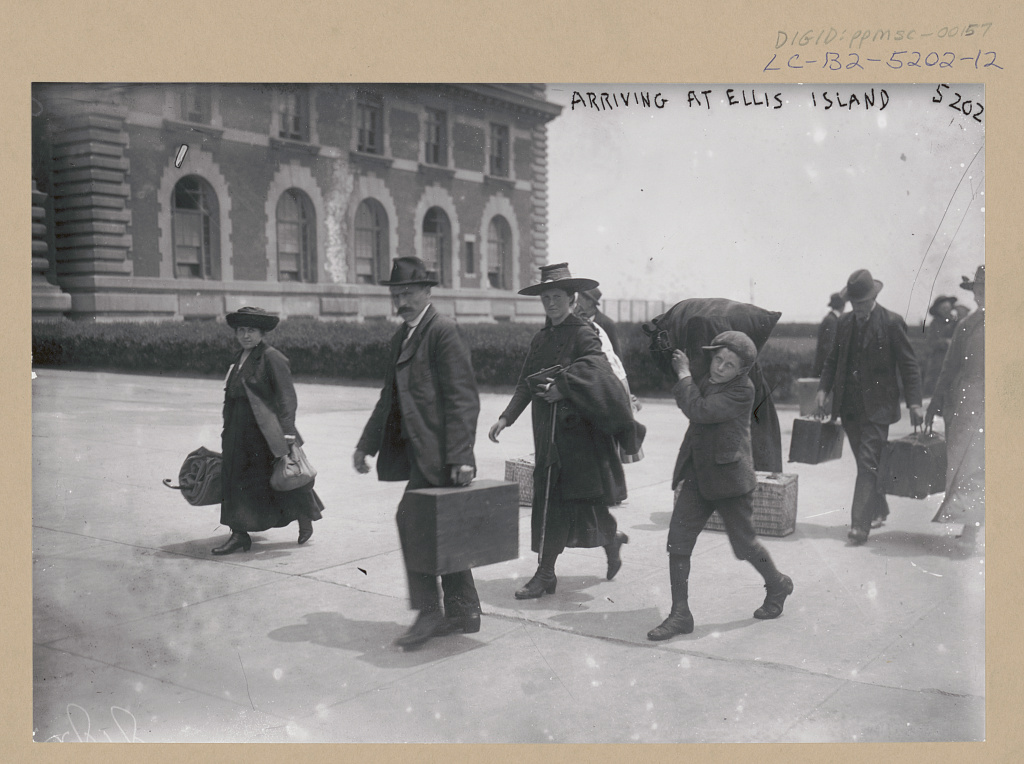
A black-and-white photograph from 1920 showing immigrants arriving at Ellis Island in New York Harbor. Groups of people carrying luggage and personal belongings are visible on the dock, representing the mass migration of the late nineteenth and early twentieth centuries.
Refer to the photograph below, which shows immigrants arriving at a major port of entry in the early twentieth century.

Photograph titled 'Arriving at Ellis Island,' George Grantham Bain Collection, 1920. Library of Congress Prints and Photographs Division.

The migration depicted in the photograph was most directly connected to which of the following broader patterns of global demographic change?
  • AThe forced relocation of indigenous populations by colonial governments seeking to concentrate land ownership among European settlers
  • BThe mass voluntary migration of people from Europe, Asia, and other regions driven by industrialization, economic opportunity, and labor demand
  • CThe seasonal migration of agricultural workers following traditional planting and harvesting cycles across continental boundaries
  • DThe return migration of colonial administrators and their families from overseas territories to their European home countries
Show answer and explanation

Answer: B

The photograph depicts the mass migration that characterized the late nineteenth and early twentieth centuries. This movement of people was driven by multiple factors related to industrialization and imperialism: population growth and economic dislocation in Europe, the demand for labor in industrializing economies such as the United States, improved transportation through steamships and railroads, and the opportunities created by economic development in the Americas and elsewhere. This demographic transformation reshaped populations across the globe.

Questions 11 to 13

The flow of silver from the mines of Potosi and New Spain to the markets of Ming China represents the creation of the first genuinely global economy. Silver mined by indigenous and African laborers in the Americas followed several routes: some crossed the Atlantic to Seville and continued through European and Asian trading networks, while other shipments crossed the Pacific from Acapulco to Manila aboard the Manila galleons. In China, this silver purchased silk, porcelain, and tea that flowed back to European consumers. The sheer volume of silver -- tens of thousands of tons over two centuries -- transformed price structures, disrupted traditional economies, and created new social classes on every continent touched by this trade.

Original historical analysis of the global silver trade during the period c. 1450–1750.

Question 11

Which of the following types of evidence does the author use to support the argument about silver's global impact?
  • APersonal testimonies from individual miners and merchants describing their daily experiences in the silver trade
  • BEconomic data about trade volumes, price changes, and the geographic movement of silver across multiple continents
  • CDiplomatic correspondence between European and Chinese rulers negotiating the terms of silver trade agreements
  • DArchaeological evidence from shipwrecks that revealed the exact composition of cargo carried on silver trade routes
Show answer and explanation

Answer: B

The author references "tens of thousands of tons" of silver, describes how silver "transformed price structures," and traces the geographic flow of silver from specific mines to specific markets. This evidence consists of economic data -- trade volumes, price fluctuations, and geographic movement patterns -- rather than personal testimonies, diplomatic documents, or archaeological findings. Recognizing the type of evidence a historian uses is essential to evaluating the strengths and limitations of historical arguments.

Question 12

According to the passage, the global silver trade most directly contributed to which of the following developments during the period 1450-1750?
  • AThe decline of Chinese manufacturing as cheap silver imports undermined the value of domestically produced goods
  • BThe isolation of the American economies from European and Asian commercial networks due to mercantilist trade restrictions
  • CThe creation of the first truly global economic system linking the Americas, Europe, Africa, and Asia through the exchange of silver for goods
  • DThe elimination of traditional barter-based trade systems in favor of a universal silver-based currency adopted by all civilizations
Show answer and explanation

Answer: C

The author argues that silver mined in the Americas flowed through European intermediaries to China, which had enormous demand for silver as its monetary base. This created unprecedented economic connections linking the Americas (production), Europe (intermediary trade), Africa (labor supply), and Asia (consumer market). The silver trade thus served as the foundation for the first truly global economic system, connecting all major world regions in a single commercial network.

Question 13

The global silver trade described in the passage was most directly situated within which of the following broader historical contexts?
  • AThe decline of long-distance trade as political instability and recurring military conflicts disrupted all major commercial networks across the world's major regions during this era
  • BThe emergence of democratic political institutions across Europe and Asia that gave merchant classes greater influence over the formation of government trade and fiscal policies
  • CThe scientific revolution's transformation of European understanding of geography and navigation, which eliminated all practical barriers to sustained global commerce
  • DThe rise of new merchant classes and the disruption of traditional social hierarchies as wealth from global trade created new sources of economic and political power
Show answer and explanation

Answer: D

The author notes that the silver trade "created new social classes on every continent." The enormous wealth generated by global silver commerce empowered new merchant and commercial classes in Europe, the Americas, and Asia, disrupting traditional social hierarchies based on land ownership, hereditary status, or religious authority. In Europe, merchant families gained political influence; in China, silver wealth reshaped urban economies; and in the Americas, the silver economy created new colonial elites.

Questions 14 to 16

A coal-fired steam engine converts heat into useful mechanical motion. Water heated in a boiler produces steam. In a piston engine, differences in pressure move a piston within a cylinder. Linkages can convert the piston’s reciprocating motion into rotary motion suitable for driving mills and other machinery. During the late eighteenth century, improvements in fuel efficiency and mechanisms for rotary motion expanded the uses of steam power.

Original historical description of late-eighteenth-century steam engines.

Question 14

The economic changes enabled by the technology described in the passage were most directly situated within which of the following broader intellectual and economic developments?
  • AThe emergence of free-market economic theories that advocated for reduced government regulation and the expansion of private enterprise
  • BThe revival of mercantilist policies that emphasized government monopolies and the accumulation of precious metals as the basis of national wealth
  • CThe development of communist economic theory that called for the collective ownership of all industrial machinery and the abolition of private property
  • DThe adoption of physiocratic principles that argued agriculture, not industry, was the only source of genuine economic value
Show answer and explanation

Answer: A

The Industrial Revolution coincided with and was reinforced by the development of free-market economic theory, particularly Adam Smith's Wealth of Nations (1776), which argued that economic prosperity was best achieved through private enterprise, competition, and minimal government interference. The steam engine and other industrial innovations were developed and deployed primarily by private entrepreneurs operating within an economic framework that increasingly favored market-driven innovation over government-controlled mercantilist systems.

Question 15

Which of the following best describes the technological innovation discussed in the passage?
  • AA new agricultural technique that increased food production by enabling the cultivation of previously unusable land
  • BA navigational instrument that allowed sailors to determine their position at sea with unprecedented accuracy
  • CA mechanical device that converted heat energy from burning fuel into rotational motion, transforming manufacturing and transportation
  • DA communication technology that enabled the rapid transmission of messages across long distances using electrical signals
Show answer and explanation

Answer: C

C is correct: the passage describes a steam engine converting heat from fuel into mechanical motion, including rotary motion. Watt’s 1769 patent concerned reducing steam and fuel consumption through improvements including the separate condenser; his 1781 patents addressed mechanisms for rotary motion. These were distinct stages in the development of engines that powered factories, with later steam engines also transforming transportation. A describes an agricultural technique, B a navigation instrument, and D electrical communication; none matches the boiler, piston and rotary machinery in the passage.

Question 16

The invention described in the passage is best understood as part of which of the following broader patterns of technological development?
  • AThe gradual improvement of agricultural tools that characterized technological change in most pre-industrial societies
  • BThe transition from organic energy sources to fossil fuels that marked the beginning of the Industrial Revolution in Britain
  • CThe development of military technologies that enabled European powers to conquer territories in Asia and Africa
  • DThe invention of new textile fibers and dyes that transformed the fashion and clothing industries across Europe
Show answer and explanation

Answer: B

The steam engine represented a pivotal moment in the transition from organic energy sources (human labor, animal power, water mills, windmills) to fossil fuel energy (coal). This shift was the defining technological characteristic of the Industrial Revolution, which began in Britain in the mid-eighteenth century. The ability to generate mechanical power from coal through steam engines removed previous limitations on manufacturing capacity and transportation speed, enabling unprecedented economic transformation.

Ready for the full-length tests?

Five full-length AP World History practice tests, every unit of notes and step-by-step solutions. 7 days free.

Start my free 7 days →