Geometry Quantitative Comparison questions ask you to compare two quantities rooted in geometric concepts: triangles, circles, parallelograms, coordinate geometry, and three-dimensional figures. You always choose from the same four fixed answers — A is greater, B is greater, the two are equal, or the relationship cannot be determined. The twist with geometry is that many figures have degrees of freedom: vertices can slide along a circle, angles can vary, and what looks fixed may not be. Below you will learn the eight stem patterns that appear, work through two interactive examples step by step, and then practice with six guided questions from the question bank.
What Are QC Geometry Questions?
Geometry Quantitative Comparison questions present two quantities that involve geometric concepts — areas, perimeters, volumes, angles, the Pythagorean theorem, or properties of inscribed and circumscribed shapes. Additional information such as figure descriptions, given measurements, or angle constraints may appear above the two quantities. You select exactly one of four fixed answer choices:
Choice
Meaning
A
Quantity A is greater
B
Quantity B is greater
C
The two quantities are equal
D
The relationship cannot be determined from the information given
These questions divide into two broad categories. Fully determined figures give you all dimensions, angles, and relationships so that you can compute exact values and determine a definitive answer (A, B, or C). These are the most common geometry QC type. Partially determined figures leave some aspect of the figure free — for instance, a quadrilateral inscribed in a circle without specifying where the vertices are. Different valid configurations produce different comparisons, leading to answer D.
Key distinction: Before computing anything, ask yourself: "Could I draw this figure differently while still satisfying all the given constraints?" If yes, the answer might be D. If no, the figure is fixed and the answer is A, B, or C.
Eight Stem Patterns You Will See
Nearly every geometry QC question matches one of these eight patterns. Recognizing the pattern quickly tells you whether to compute, compare, or test extreme cases.
1
Inscribed Shape in Circle
A shape is inscribed in a circle without fixed vertex positions. The area or perimeter depends on the configuration. Answer is often D because vertices can slide.
2
Parallelogram with Given Sides and Angle
Side lengths and one angle are given. The classic trap is using the side as the height. Since the height is always less than the slant side, the area is less than the product of the sides.
3
Triangle with Point on Segment
A point on a line segment with an unspecified position creates indeterminacy. Unless the point's position is fixed by additional constraints, the answer is D.
4
Square vs. Equilateral Triangle Area
Compare areas of different regular shapes with the same side length. Uses the formulas for square area (s2) and equilateral triangle area (43s2).
5
Adjoining Shapes with Shaded Region
Two or more shapes combine. Compare the shaded region's area to a given number. Often the shaded area equals a surprisingly clean value.
6
Coordinate Geometry — Lines and Slopes
Compare slopes or positions of lines through specified points. Steeper lines through the origin have greater slopes.
7
Polygon Midpoints
Connect midpoints of a polygon's sides and compare the resulting perimeter to the original. The midpoint polygon perimeter is always less than the original.
8
3D Figures
Compare volumes, surface areas, or diagonal lengths of three-dimensional figures such as cones, cylinders, and rectangular solids.
How to Solve QC Geometry Step by Step
These five strategies apply across all eight patterns. Work through them in order and you will catch the traps that the test writers set.
Always sketch the figure described in the problem, even if a figure is provided. Label every known length, angle, and relationship. This visual representation often makes the comparison obvious and helps you spot degrees of freedom.
Keep these formulas ready: triangle area =21×base×height; equilateral triangle area =43s2; parallelogram area =base×height (not base times side); circle area =πr2; circumference =2πr; Pythagorean theorem a2+b2=c2. Plug in given values before attempting any algebraic manipulation.
Ask: "Could I draw this figure differently while satisfying all the given constraints?" If yes, the answer might be D — test two extreme configurations. If no, the figure is fixed and the answer is A, B, or C. This single question eliminates many wrong answers.
When a figure has freedom, test the extremes. Make the shape as "fat" as possible (maximize area) and as "thin" as possible (minimize area). If the comparison changes between these extremes, the answer is D. Two well-chosen test cases are usually sufficient.
You can often determine which quantity is larger without computing either one. For example, a parallelogram's area equals base times height, and the height is always less than or equal to the side length. So area is at most base times side — and strictly less when the angle is not 90 degrees.
Pro tip: On the GRE, geometry QC questions reward pattern recognition over calculation. If you can identify the stem pattern and immediately determine whether the figure is fixed or free, you can often select the answer in under 60 seconds.
Worked Example: Parallelogram Area
Work through each step below. You must answer each mini-challenge correctly to unlock the next step. If you get stuck, a second wrong attempt will reveal the answer so you can keep going.
Interactive Walkthrough0/5 steps
Parallelogram PQRS: Area vs. 70
Parallelogram PQRS has PQ=10 and QR=7. Angle PQR is obtuse.
Quantity A
Quantity B
The area of parallelogram PQRS
70
Quantity A is greater
Quantity B is greater
The two quantities are equal
Cannot be determined
1
Step 1: Recall the parallelogram area formula
The area of a parallelogram is base times what?
2
Step 2: Identify the base and the slant side
3
Step 3: Relate the height to the side QR
4
Step 4: Compute the maximum possible area
5
Step 5: Select the final answer
Worked Example: Inscribed Quadrilateral
This example teaches the extreme-case strategy for partially determined figures. Work through each step to see why two test cases are enough.
Interactive Walkthrough0/6 steps
Quadrilateral EFGH Inscribed in a Circle
Quadrilateral EFGH is inscribed in a circle of radius 5. The diagonal EG is a diameter of the circle.
Quantity A
Quantity B
The area of quadrilateral EFGH
50
Quantity A is greater
Quantity B is greater
The two quantities are equal
Cannot be determined
1
Step 1: Find the length of diagonal EG
If the radius is 5, what is the diameter EG?
2
Step 2: Apply Thales' theorem
3
Step 3: Check for degrees of freedom
4
Step 4: Test extreme case — maximum area
5
Step 5: Test extreme case — small area
6
Step 6: Select the final answer
Practice Questions
These six questions are drawn from the question bank. Select your answer and check it, then walk through the step-by-step solution. All four QC answer choices are provided for each question.
Practice 1 — Hard
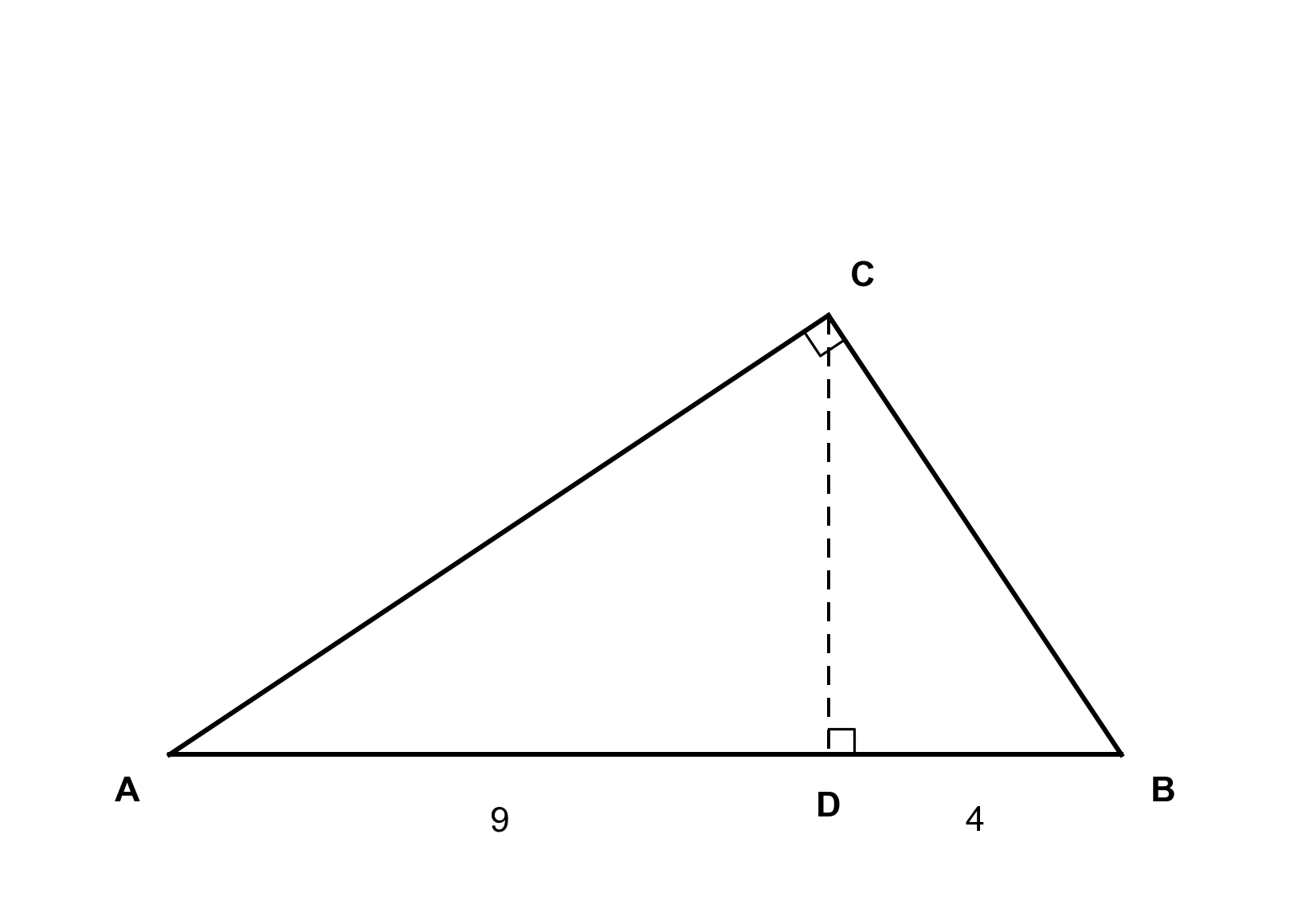
In right triangle ABC, the right angle is at C. Altitude CD is drawn from C perpendicular to hypotenuse AB. AD=9 and DB=4.
Quantity A
Quantity B
CD
5.5
Select one answer:
Practice 2 — Hard
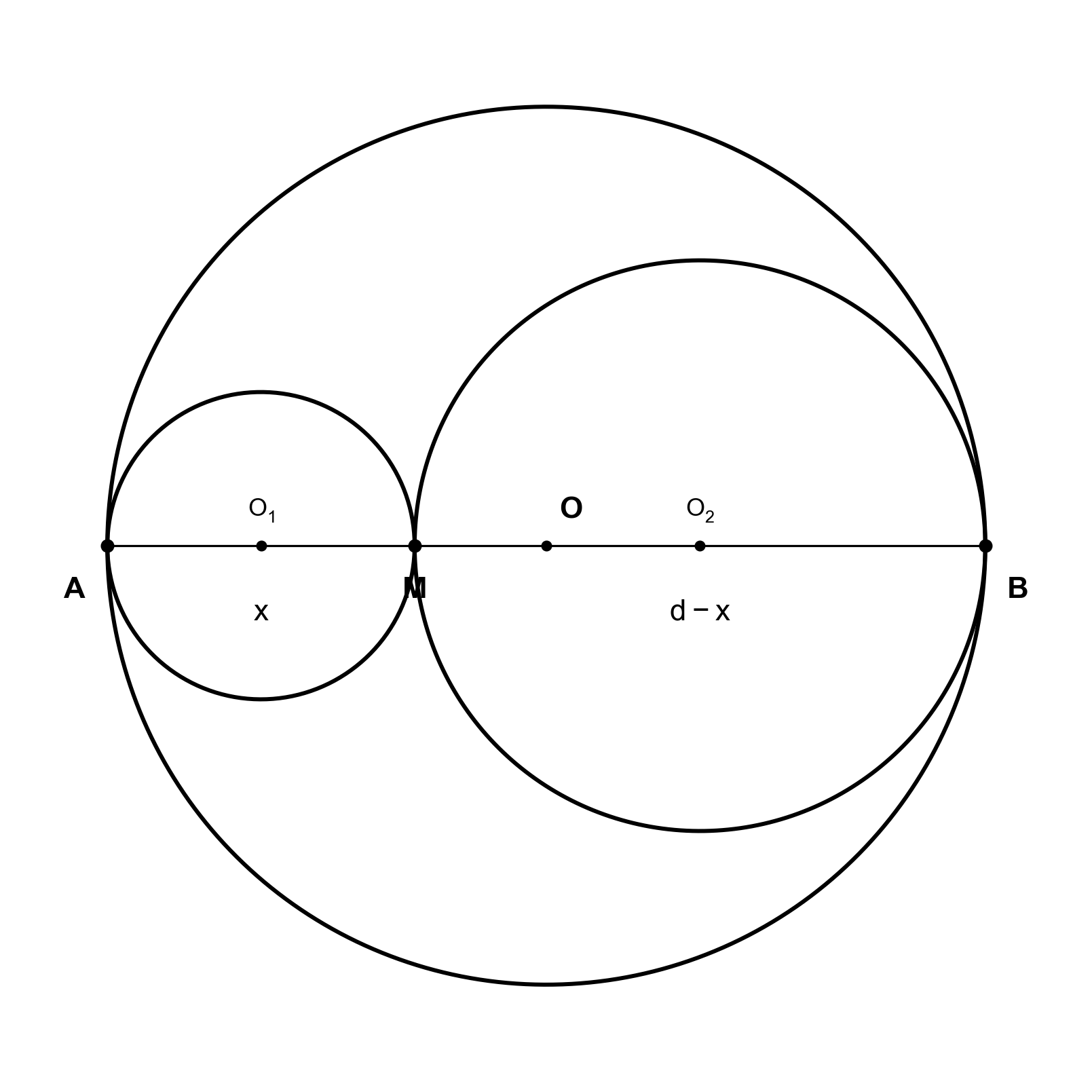
Circle O has diameter AB with length d. Two smaller circles are drawn inside: circle O1 has diameter AM and circle O2 has diameter MB, where M is on AB with AM=x and MB=d−x.
Quantity A
Quantity B
The circumference of circle O
The sum of the circumferences of circles O1 and O2
Select one answer:
Practice 3 — Hard
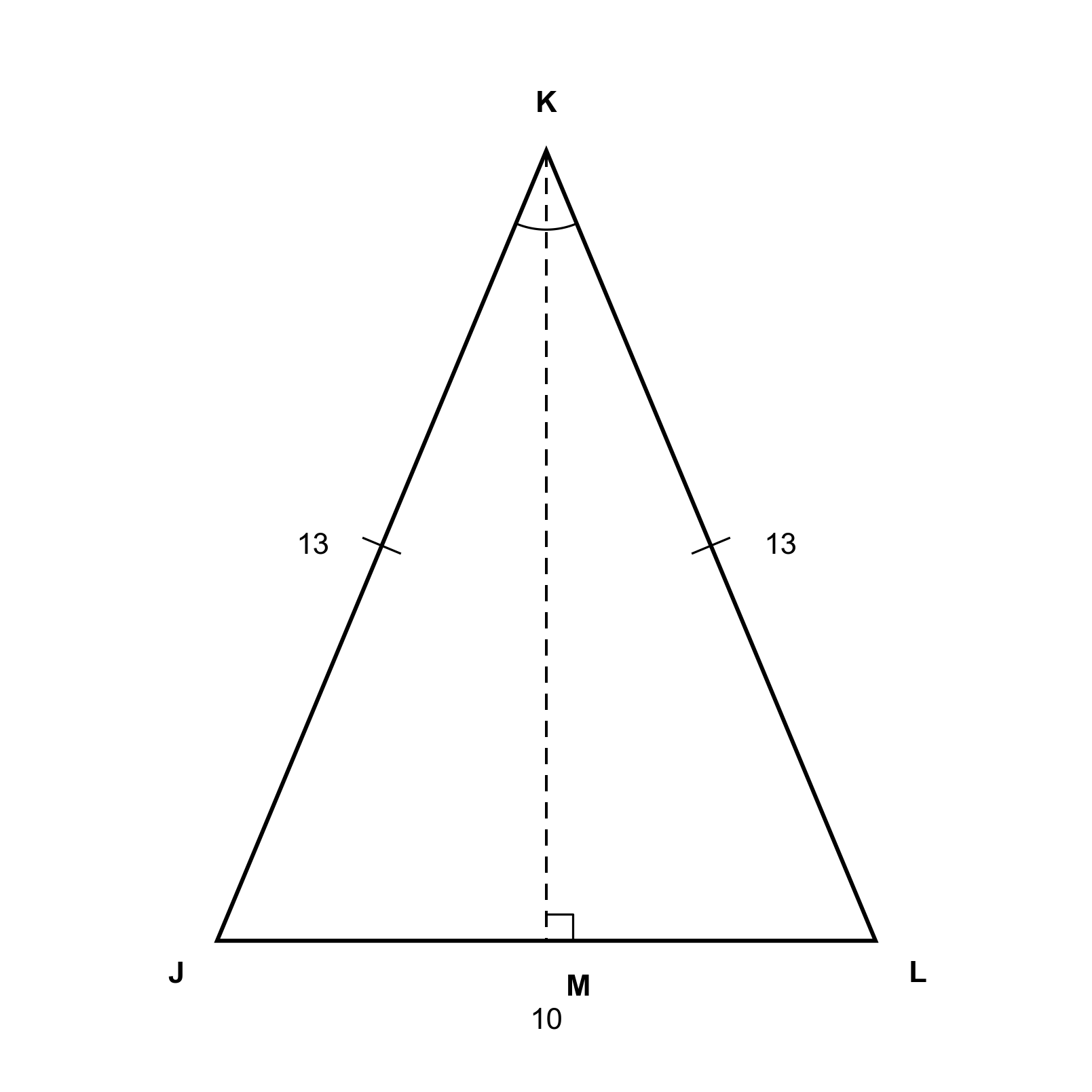
In isosceles triangle JKL, JK=KL=13 and JL=10. The vertex angle is ∠JKL.
Quantity A
Quantity B
The area of triangle JKL
59
Select one answer:
Practice 4 — Hard
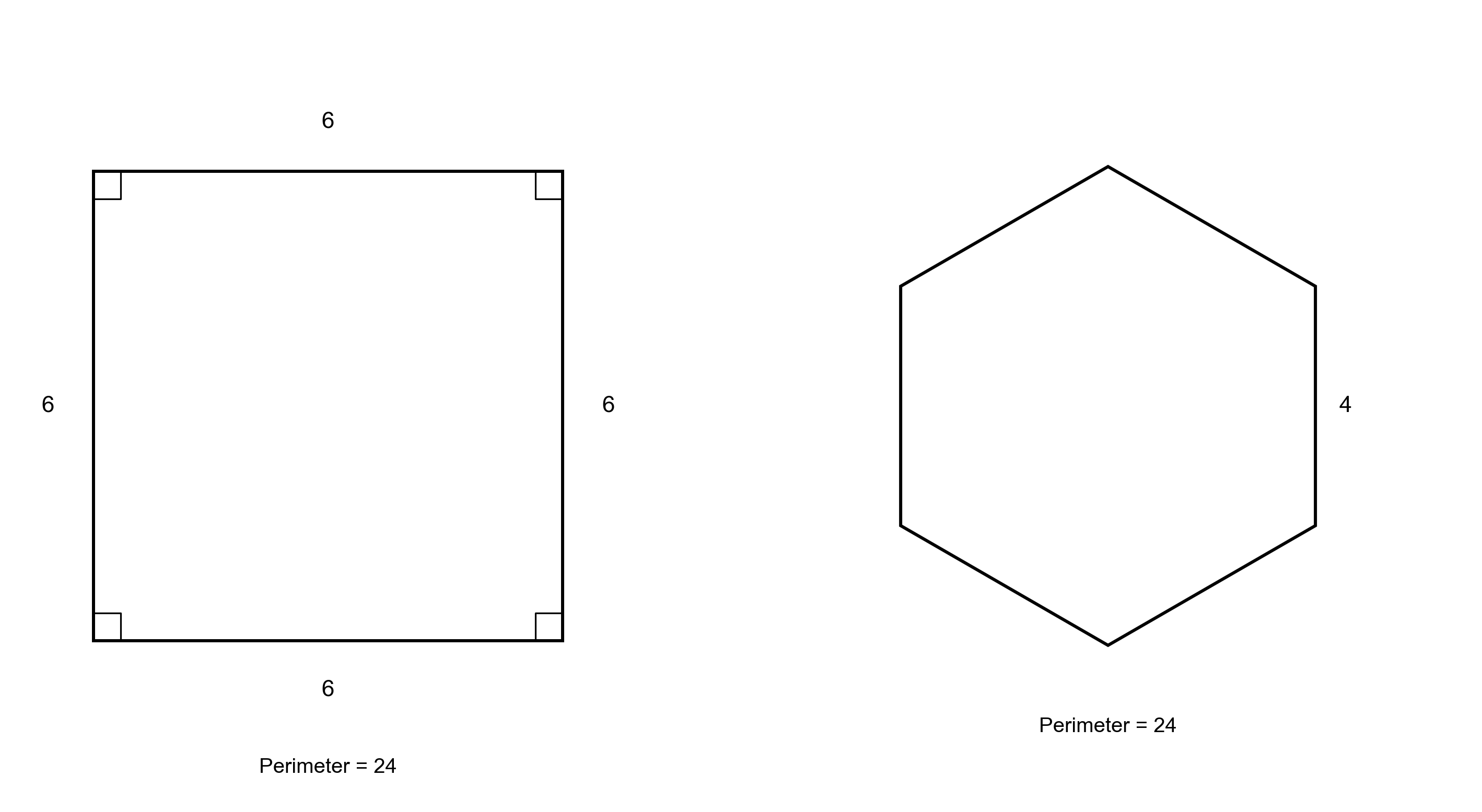
A regular hexagon and a square each have a perimeter of 24.
Quantity A
Quantity B
The area of the square
The area of the regular hexagon
Select one answer:
Practice 5 — Hard
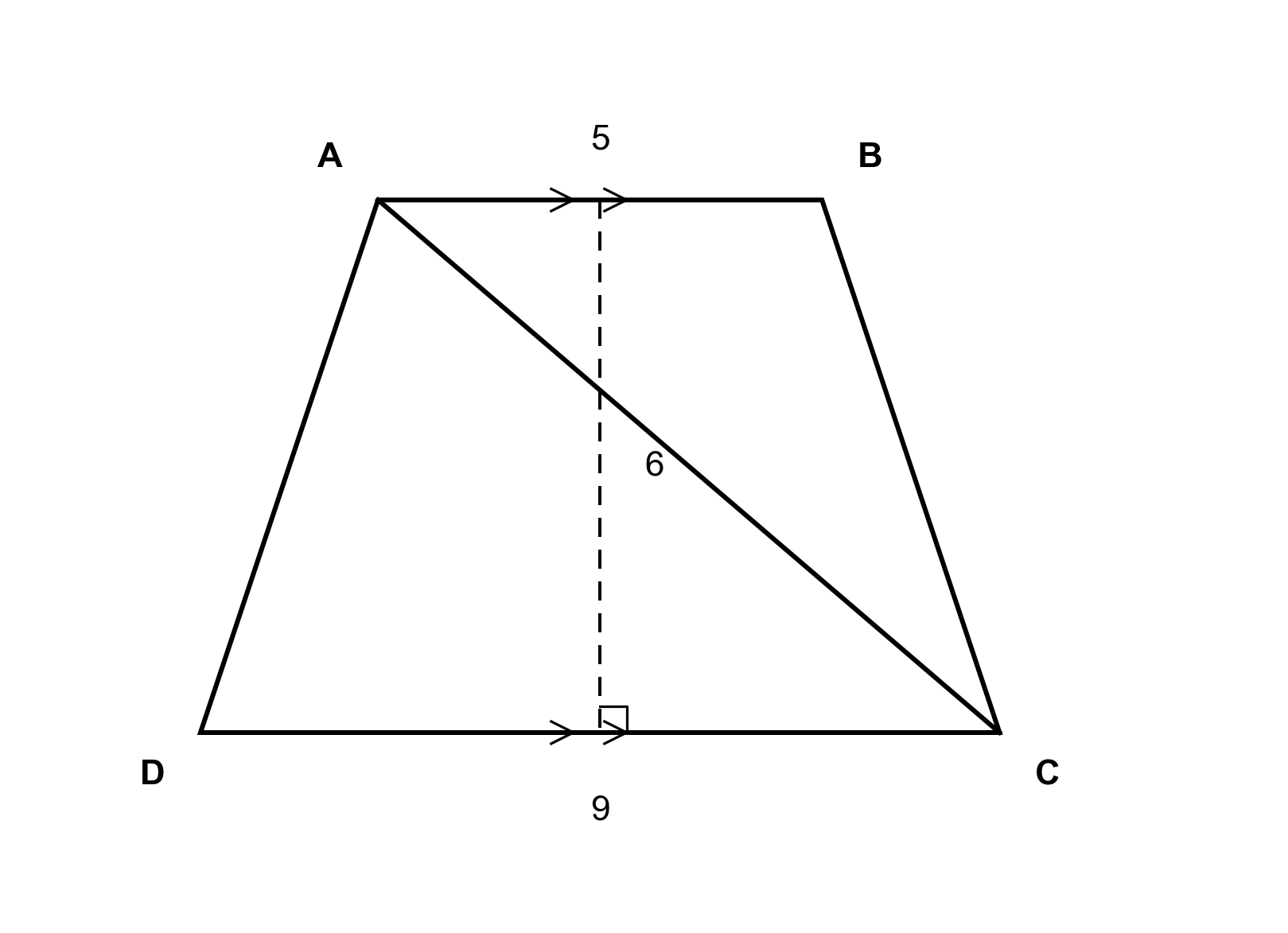
Trapezoid ABCD has parallel sides AB and CD with AB=5, CD=9, and the height from AB to CD is 6. Diagonal AC divides the trapezoid into two triangles.
Quantity A
Quantity B
The area of trapezoid ABCD
44
Select one answer:
Practice 6 — Hard
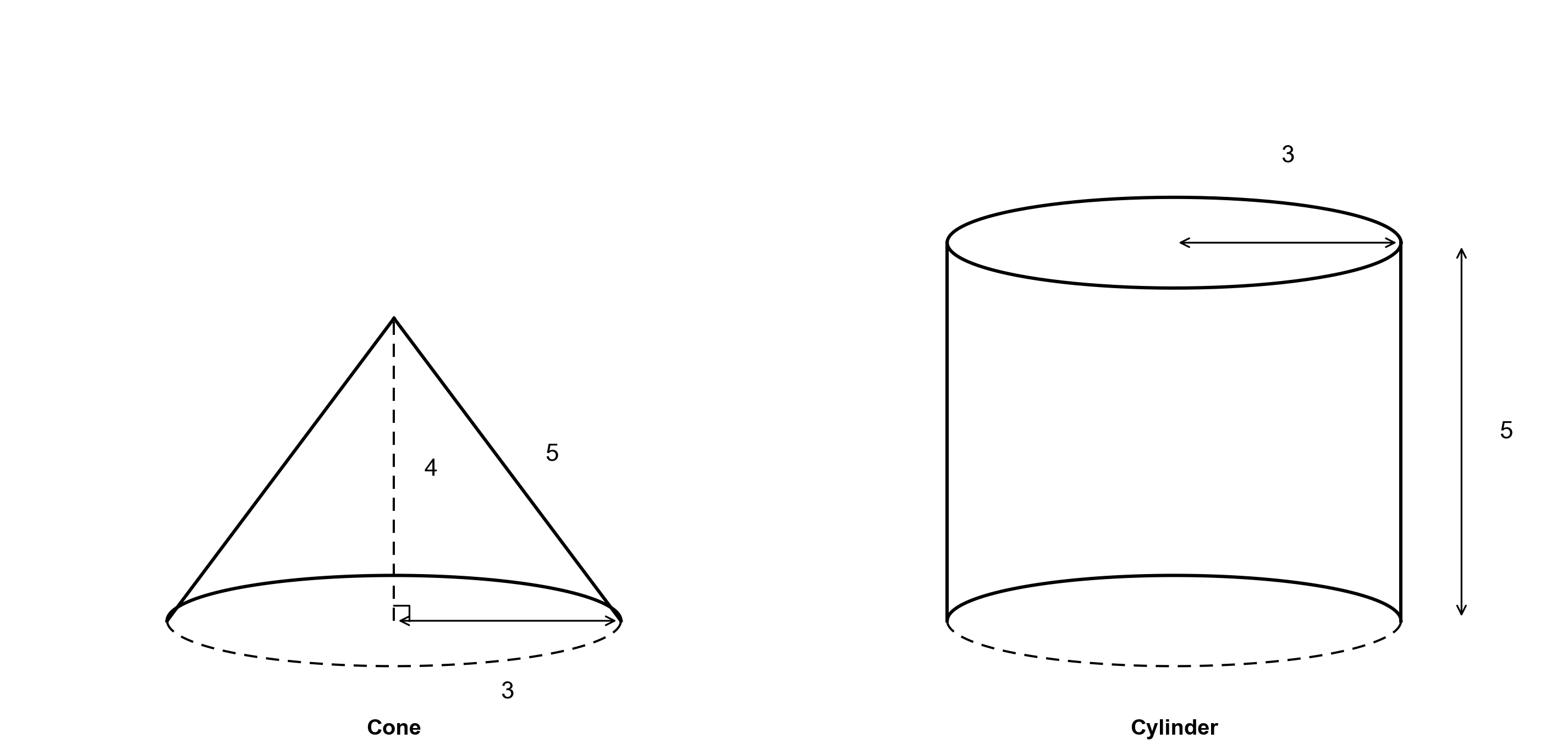
A right circular cone and a right circular cylinder each have a base radius of 3. The slant height of the cone is 5, and the height of the cylinder equals the slant height of the cone.
Quantity A
Quantity B
The volume of the cone
The volume of the cylinder
Select one answer:
Three Common Traps
Test writers design geometry QC questions around predictable errors. Knowing these traps lets you avoid them and, in many cases, identify the correct answer faster.
In a parallelogram with sides 4 and 6, the area is NOT 4×6=24. The height is the perpendicular distance from one side to its opposite, which is always less than or equal to the adjacent side. It equals the adjacent side only when the angle is 90 degrees (a rectangle). When the problem says the angle is obtuse or acute, the height is strictly less than the side, so the area is strictly less than the product of the two side lengths.
"A quadrilateral inscribed in a circle" does not mean it is a square or rectangle. The vertices can be positioned anywhere on the circle, producing wildly different areas. The same applies to triangles inscribed in circles — unless the problem specifies the triangle is equilateral or gives exact side lengths, the shape is not fixed.
In 3D figures like cones, the slant height is the distance along the surface from the apex to the base edge. The vertical height is the perpendicular distance from the apex to the center of the base. These are related by the Pythagorean theorem: slant2=r2+h2. Using the slant height directly in the volume formula gives an incorrect answer.
Quick Recognition Guide
Use this table to quickly identify the stem pattern and likely answer structure when you encounter a geometry QC question.
If You See...
Think...
Likely Answer
Shape inscribed in circle, no fixed positions
Test extreme cases — fat vs. thin
D
Parallelogram with sides and an obtuse angle
Height < side, so area < base × side
B (area is less than the product)
Point on segment with no fixed position
Point can slide — lengths are indeterminate
D
Two shapes, same side or perimeter
Apply exact formulas and compare
A, B, or C (fully determined)
Shaded region in combined shapes
Compute the exact shaded area
Often C (surprisingly equal)
3D figure with slant height
Find vertical height via Pythagorean theorem first
Compute then compare
All dimensions and angles given
Figure is fully determined — compute
A, B, or C
Circumference comparison with split diameter
Circumference is linear in diameter (C=πd)
C (circumferences add up)
Remember: The single most important question in geometry QC is "Is this figure fully determined?" If all measurements and angles are specified, compute. If something is free to vary, test extremes.
Study Checklist
Track your preparation with this checklist. Check off each item as you master it.
QC Geometry Mastery Checklist0/10 complete
Frequently Asked Questions
How many geometry Quantitative Comparison questions appear on the GRE?
Each Quantitative Reasoning section contains roughly 7-8 QC questions total. Of those, one to three typically involve geometry concepts such as triangles, circles, parallelograms, or coordinate geometry. The exact count varies by section, but geometry is one of the most frequently tested QC domains.
When should I choose answer D on a geometry QC question?
Choose D when the geometric figure has degrees of freedom that allow the comparison to go either way. For example, if a quadrilateral is inscribed in a circle but vertex positions are not fixed, different valid configurations can make Quantity A greater or Quantity B greater. Test two extreme cases: if the comparison flips, the answer is D. If both extremes give the same result, the answer is likely A, B, or C.
What is the most common trap in geometry QC questions?
The most common trap is using the side length as the height in a parallelogram. The area of a parallelogram is base times height, not base times side. When the angle is not 90 degrees, the height is strictly less than the slant side, so the area is less than the product of the two side lengths. A close second is assuming an inscribed shape is regular when it is not.
Do I need to memorize geometry formulas for GRE QC questions?
Yes, you should know the core formulas: triangle area =21×base×height; equilateral triangle area =43s2; parallelogram area =base×height; circle area =πr2; circumference =2πr; and the Pythagorean theorem. You should also know the volume formulas for cylinders (πr2h) and cones (31πr2h). These formulas appear repeatedly in QC geometry questions and are not provided on the test.
How do I handle QC geometry questions that reference a figure I cannot see?
Draw your own figure based on the text description. Label every given measurement, angle, and relationship. The act of sketching often reveals whether the figure is fully determined (answer A, B, or C) or has free parameters (possibly answer D). If the problem states a figure is "not drawn to scale," be especially careful — the visual impression may be misleading. Always rely on the given measurements, not the apparent proportions.