Factor Markets
Unit 5 connects production to input demand: marginal product becomes marginal revenue product, factor-market supply and demand determine a competitive factor price, and firms compare marginal revenue product with marginal factor cost.
- Exam weight
- 10–13%
- Topics
- 4
Introduction
Unit 5 connects production to input demand: marginal product becomes marginal revenue product, factor-market supply and demand determine a competitive factor price, and firms compare marginal revenue product with marginal factor cost.
Factor demand is derived demand. A worker-hour, machine-hour, or acre has no independent demand in the model; its demand comes from the revenue generated by the additional output it helps produce. That link makes output price, productivity, and the prices of related inputs important factor-demand determinants.
Market structure matters on the buying side. A competitive employer takes the factor price as given, while a monopsonistic buyer faces an upward-sloping factor-supply curve and pays a higher price to attract more units. The graphs use marginal conditions to separate the quantity decision from the factor price paid.
marginal revenue product
competitive wage and employment
profit-maximizing factor quantity
monopsony wage and employment
Introduction to Factor Markets
Why does a firm demand labor or another productive factor?
A firm demands a factor because the factor’s marginal product creates revenue; its marginal revenue product is the most the next unit adds to revenue.
Marginal revenue product sets factor demand
Connect each worker’s marginal product to the revenue created and the firm’s hiring comparison.
- Held constant
- Output price is fixed at 3 currency units, the output market is perfectly competitive, technology and fixed inputs are unchanged, and worker-hours are otherwise comparable.
- Time horizon
- Short run with at least one fixed input and diminishing marginal product.
- Read the change
- A change in the wage moves the firm along this MRP schedule; output price, productivity, or another MRP determinant shifts the schedule.
- Workers hired at wage 17
- 3
- Fourth worker MRP minus wage
- −5 currency/hour
- Horizontal axis
- Workers employed per hour
- Vertical axis
- Currency per worker-hour
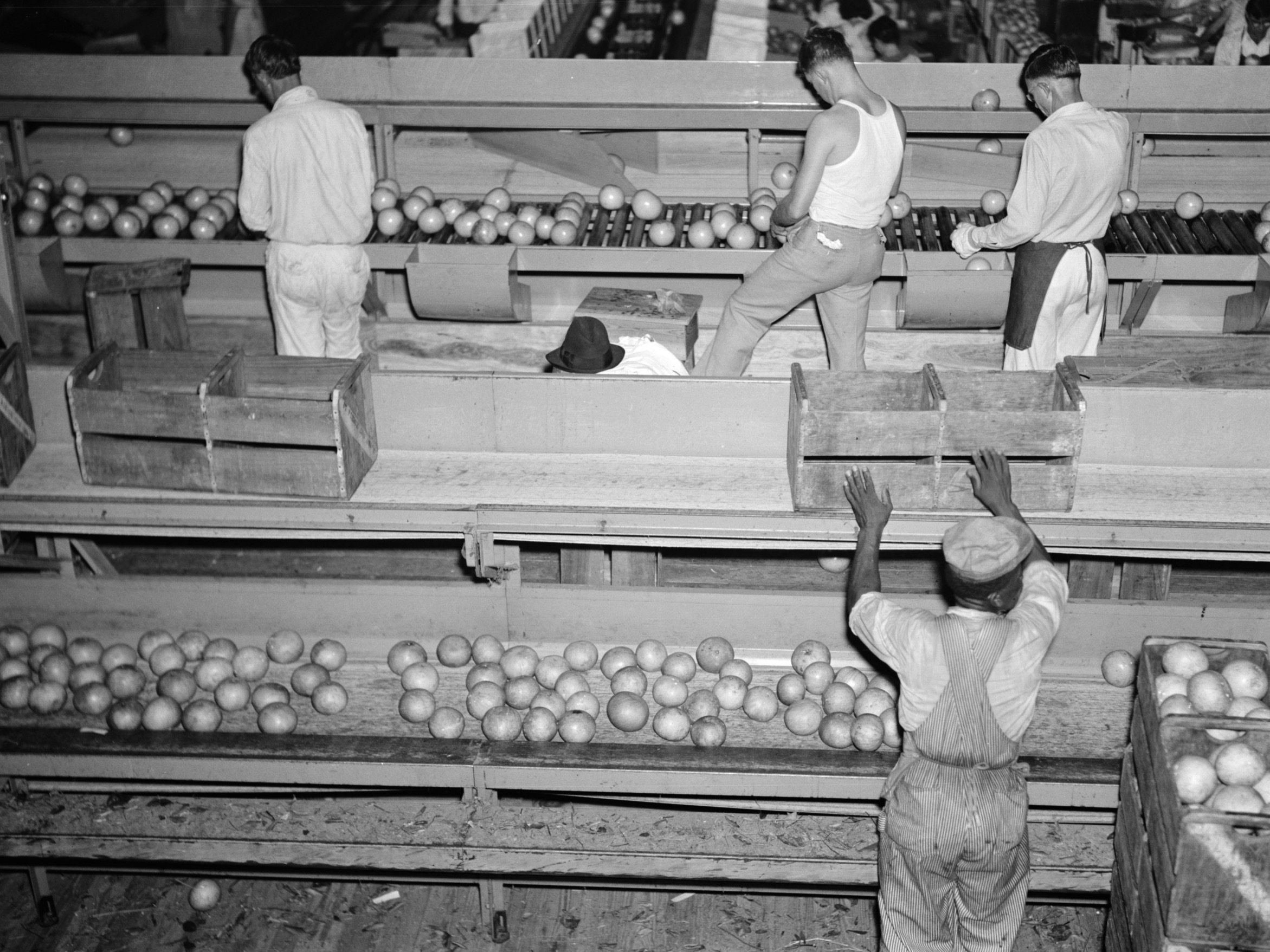
A firm’s demand for labor is derived from the output workers produce
Demand for packed fruit creates demand for the labor that grades and prepares it. A worker’s added physical output becomes marginal revenue product only after that output is valued by the revenue the firm earns from selling it.