Cold War and Contemporary Europe
Postwar Europe rebuilt through domestic planning, welfare bargains, migration, U.S. aid, and integration while Cold War institutions divided the continent. Decolonization, rights movements, the fall of communism, European cooperation, technology, and globalization changed states without ending nationalism, inequality, or security conflict.
- Exam weight
- 10–15%
- Topics
- 15
- Visual studies
- 4
How did Europeans rebuild, divide, and reconnect authority after 1945?
Occupation and incompatible security projects divided Europe while reconstruction joined outside aid to domestic planning and welfare bargains.
Cold War alliances limited direct superpower war but imposed unequal bloc institutions that European movements later challenged.
Decolonization, migration, integration, technology, and globalization layered authority across states without eliminating nationalism or inequality.
How the changes connect
- War destruction produces occupation and reconstruction
- Alliance and deterrence institutionalize division
- Rights movements and opposition widen citizenship
- Integration and globalization redistribute selected authority
Compare the cases
| Case | How it worked | What made it distinct |
|---|---|---|
| Welfare democracy | Social provision plus parliamentary legitimacy | Broad but unequal citizenship |
| Communist bloc | Party-state rule and Soviet security system | Reform constrained until 1989 |
| European integration | Shared rules, courts, and markets | Pooled rather than erased sovereignty |
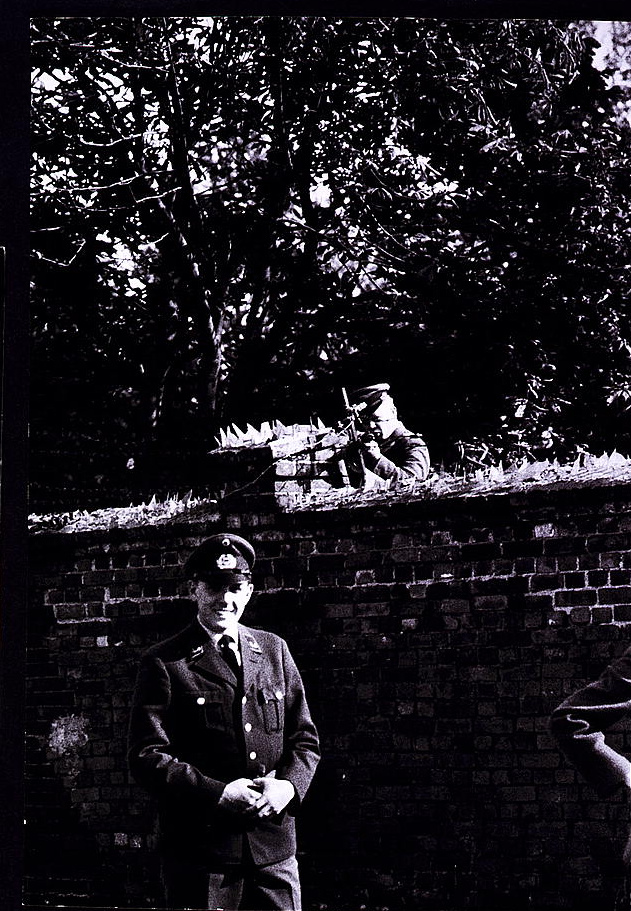
Read the chapter image
Which institutions were required to make this boundary effective, and what experiences remain outside the photograph?
Contextualizing Cold War and Contemporary Europe
How did wartime alliance become a divided European order after 1945?
The defeat of Nazi Germany left destroyed economies, displaced populations, occupation zones, security fears, and a power imbalance favoring the United States and Soviet Union. Cooperation broke down through conflicting political reconstruction, reparations, military security, and German settlement, but European parties, governments, and publics still made consequential choices within that pressure.
The Allies divided Germany and Austria into occupation zones, moved borders, pursued demilitarization and denazification differently, and established Soviet-backed security control in eastern Europe. Military presence and occupation authority gave postwar political arguments an unequal institutional setting. Communist parties consolidated power in eastern Europe with Soviet support, coercion, and reorganized state institutions, while western coalitions restored elections and linked recovery to United States aid and domestic planning. Cold War blocs formed through political institutions and local coalitions as well as superpower command.
Western currency reform and occupation-zone coordination contributed to the 1948 Soviet blockade of West Berlin; the airlift sustained the western sectors and two German states followed in 1949. Germany and Berlin turned abstract rivalry into concrete tests of access, sovereignty, and alliance credibility. Europe divided when occupation power and incompatible security projects interacted with domestic political reconstruction, making the German question a repeated institutional test rather than an automatic result of wartime conferences.
Evidence worth keeping
Know what each example demonstrates, not only its name.
Occupation and security structure
- What happened
- The Allies divided Germany and Austria into occupation zones, moved borders, pursued demilitarization and denazification differently, and established Soviet-backed security control in eastern Europe.
- What it proves
- Military presence and occupation authority gave postwar political arguments an unequal institutional setting.
- Use it for
- Use Occupation and security structure as direct support for the main cause. Name the actor and explain why the result followed.
- Do not overclaim
- Occupation and security structure shows that Military presence and occupation authority gave postwar political arguments an unequal institutional setting. It remains one bounded example and cannot represent every region or group.
Competing political reconstruction
- What happened
- Communist parties consolidated power in eastern Europe with Soviet support, coercion, and reorganized state institutions, while western coalitions restored elections and linked recovery to United States aid and domestic planning.
- What it proves
- Cold War blocs formed through political institutions and local coalitions as well as superpower command.
- Use it for
- Compare Competing political reconstruction with Occupation and security structure to test whether the same mechanism operated in another setting.
- Do not overclaim
- Competing political reconstruction shows that Cold War blocs formed through political institutions and local coalitions as well as superpower command. It remains one bounded example and cannot represent every region or group.
Berlin and the German question
- What happened
- Western currency reform and occupation-zone coordination contributed to the 1948 Soviet blockade of West Berlin; the airlift sustained the western sectors and two German states followed in 1949.
- What it proves
- Germany and Berlin turned abstract rivalry into concrete tests of access, sovereignty, and alliance credibility.
- Use it for
- Use Berlin and the German question to qualify the claim. State the group, place, or condition for which the pattern differed.
- Do not overclaim
- Berlin and the German question shows that Germany and Berlin turned abstract rivalry into concrete tests of access, sovereignty, and alliance credibility. It remains one bounded example and cannot represent every region or group.
Use on the exam
Europe divided when occupation power and incompatible security projects interacted with domestic political reconstruction, making the German question a repeated institutional test rather than an automatic result of wartime conferences.
Do not say Yalta simply “gave away” eastern Europe, erase coercion under Soviet-backed regimes, or remove European political actors from a two-superpower story.
Bottom line: Build the claim with Occupation and security structure and Competing political reconstruction, then use Berlin and the German question to define its limits.