Financial Sector
The financial sector channels saving toward borrowing and investment, creates transaction deposits through lending, and transmits monetary policy through interest rates and aggregate demand.
- Exam weight
- 18–23%
- Topics
- 7
Introduction
The financial sector channels saving toward borrowing and investment, creates transaction deposits through lending, and transmits monetary policy through interest rates and aggregate demand.
A bond is debt, a stock is ownership, and money is the most liquid transaction asset. Interest rates connect present and future value, while inflation determines how much purchasing power a nominal return actually delivers.
Banks create deposits when they lend, but every claim must remain on a balanced ledger. The AP money market uses a nominal interest rate and nominal money balances; the loanable-funds market uses a real rate and saving per period. Keeping those axes distinct prevents most unit errors.
asset price
real return
money creation
nominal interest rate
real interest rate
Financial Assets
How do money, bonds, and stocks differ, and why do fixed-payment bond prices move opposite market interest rates?
Money provides liquidity, bonds promise debt payments, and stocks represent residual ownership; a higher market discount rate lowers the present value of a fixed future payment.
A higher discount rate lowers a fixed-payment bond price
Connect market yield changes to the present value of one promised future payment.
- Held constant
- One certain payment arrives in one year; taxes, default risk, coupons, and transaction costs are omitted.
- Time horizon
- One-year present-value comparison.
- Read the change
- Changing the market rate moves along this price relation; changing the promised payment or risk would create a different relation.
- Future payment
- 110
- Horizontal axis
- Market interest rate
- Vertical axis
- Present bond price
- same payment, heavier discount
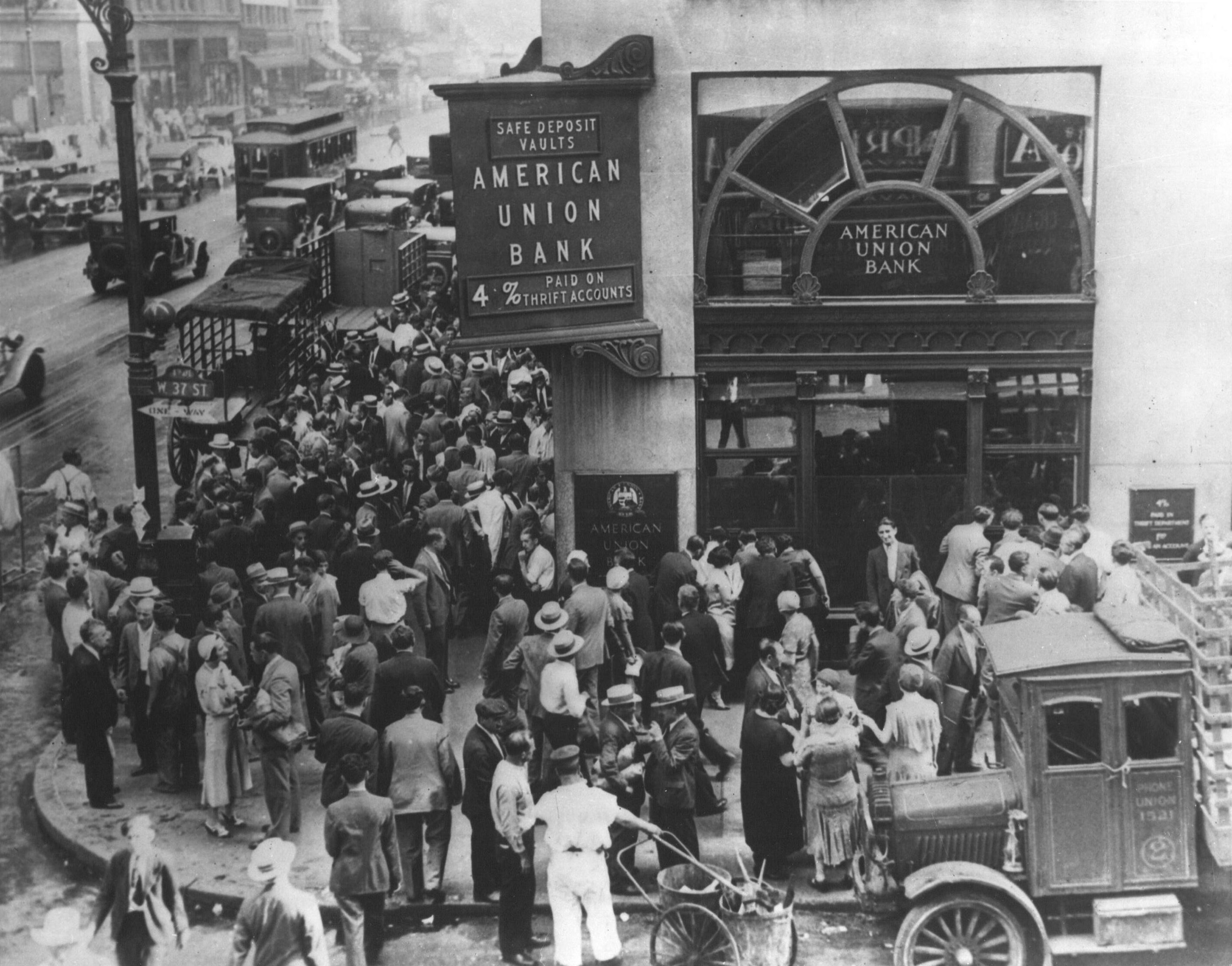
Liquidity depends on confidence and timing
Depositors value a bank claim partly because it can be converted into spendable funds. When many people demand conversion at once, a maturity mismatch can create a liquidity crisis even though the bank holds longer-term assets.