Indigenous Societies and Atlantic Contact
Before sustained European colonization, Indigenous societies developed distinct political economies around local environments. Atlantic contact then joined those societies to conquest, commerce, migration, and biological exchange on profoundly unequal terms.
- Exam weight
- 4–6%
- Topics
- 7
- Visual studies
- 4
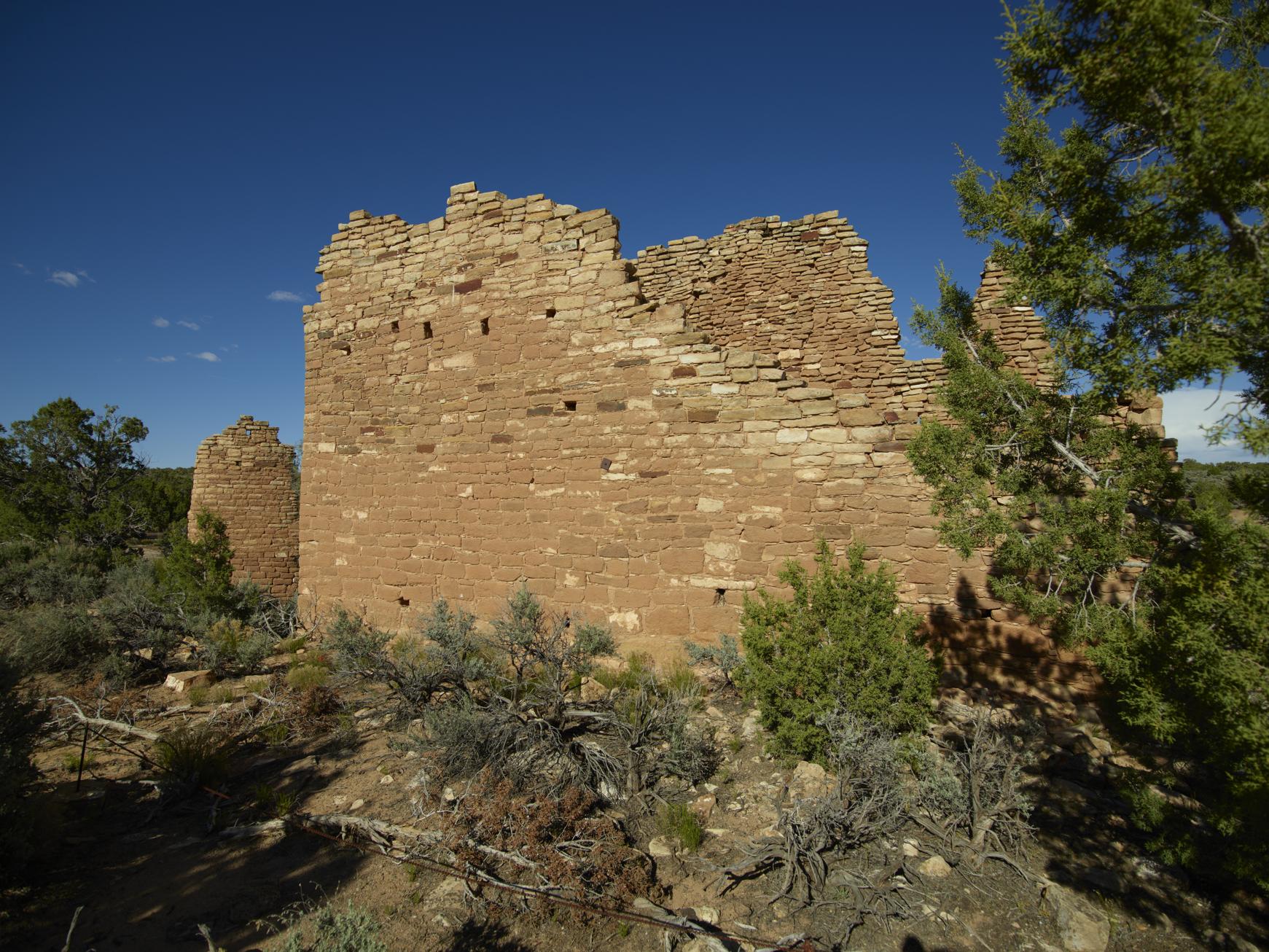
How did existing Indigenous worlds shape the consequences of Atlantic contact?
Indigenous societies developed distinct political and economic systems suited to regional environments.
European maritime expansion entered those systems through trade, alliance, mission, conquest, and biological exchange.
Disease and coercive institutions shifted power while Indigenous and African communities resisted, adapted, and survived.
How the changes connect
- Regional adaptation creates diverse societies
- Atlantic rivalry sustains contact
- Disease and alliance alter power
- Labor and mission make rule durable
Compare the cases
| Case | How it worked | What made it distinct |
|---|---|---|
| Pueblo communities | Irrigation and compact settlement | Collective infrastructure in an arid region |
| Mississippian centers | Agriculture, river trade, and mound construction | Dense settlement and ranked authority |
| Haudenosaunee | Negotiated confederacy | Shared diplomacy with retained member identity |
Read the chapter image
What kinds of planning and shared labor are visible here, and what would you still need to learn from evidence outside the photograph?
Contextualizing Period 1
How did geography and long-established Indigenous societies shape what happened when Atlantic empires arrived?
North America in 1491 contained many sovereign peoples rather than an empty landscape waiting for settlement. Communities governed through towns, confederacies, kin networks, chiefdoms, and mobile bands. Their economies joined farming, hunting, fishing, gathering, and trade in combinations suited to local climate and terrain.
European expansion entered this existing political world. Iberian monarchies brought experience from Atlantic islands, commercial rivalry, missionary goals, and technologies for long voyages. They did not arrive with automatic control: expeditions depended on supplies, information, translators, local alliances, and the divisions or cooperation they encountered.
Contact changed the balance because disease, military force, coerced labor, and Atlantic resources worked together. Even so, outcomes remained regional. Dense empires in Mesoamerica faced different conquest strategies from dispersed communities in the North American interior, and Native diplomacy continued to shape colonial survival for generations.
Evidence worth keeping
Know what each example demonstrates, not only its name.
Regional environmental adaptation
- What happened
- Pueblo communities used irrigation and compact settlements in the arid Southwest, while many peoples of the Eastern Woodlands combined maize agriculture with hunting and forest resources. These were deliberate systems of land use, storage, and cooperation.
- What it proves
- Indigenous economies were varied responses to environmental opportunities and limits, not a single primitive stage of development.
- Use it for
- Contextualizing later conflicts over land and comparing regional societies.
- Do not overclaim
- Environment influenced choices but did not mechanically determine culture or political organization.
Atlantic imperial competition
- What happened
- Portugal and Spain developed maritime routes, island plantations, and royal claims before sustained settlement on the North American mainland. Other European powers later challenged Iberian advantages through trade, private ventures, and competing territorial claims.
- What it proves
- Exploration grew from state rivalry, commerce, religion, and accumulated maritime experience rather than curiosity alone.
- Use it for
- Explaining why contact became sustained colonization.
- Do not overclaim
- A royal claim on a map did not equal effective occupation or control of people on the ground.
Native political power
- What happened
- European newcomers negotiated with established nations for trade, food, military assistance, passage, and settlement. Indigenous leaders assessed outsiders through existing rivalries and sometimes used alliance to gain leverage against regional opponents.
- What it proves
- Native nations were political actors whose decisions shaped early colonial outcomes.
- Use it for
- Complicating a one-directional conquest narrative.
- Do not overclaim
- Alliance did not guarantee equal power, permanent cooperation, or foreknowledge of disease and settler expansion.
Use on the exam
European expansion after 1492 entered a politically and ecologically diverse Indigenous world; geography and Native diplomacy shaped early encounters, while Atlantic disease, state resources, and coercive institutions gradually shifted power toward colonizers.
Do not begin the period with Europeans. Doing so erases the societies, economies, and diplomatic systems that determined what newcomers could initially do.
Bottom line: Start with the societies already present, then explain how Atlantic contact changed their choices and power.
Native American Societies Before European Contact
Why did Native societies develop such different economies and political structures before sustained European contact?
Indigenous communities adapted inherited knowledge to sharply different environments. Rainfall, growing seasons, river systems, animal populations, and soil shaped which resources were reliable, but people modified those environments through irrigation, controlled burning, terracing, fishing systems, and selective cultivation.
Food production influenced settlement and government without producing one predictable outcome. Maize agriculture could support dense towns and regional exchange, while mobility could be an efficient strategy where resources shifted seasonally. Political authority ranged from household and village councils to confederacies and stratified chiefdoms with specialized political and ceremonial roles.
Trade connected these societies across long distances. Copper from the Great Lakes, shells from the coasts, and crops developed in Mesoamerica moved through networks that long predated Atlantic contact. The key comparison is therefore not “advanced” against “simple,” but the mechanism each society used to secure food, coordinate labor, manage conflict, and maintain relationships.
Evidence worth keeping
Know what each example demonstrates, not only its name.
Pueblo irrigation and towns
- What happened
- Communities in the Southwest directed scarce water to maize agriculture and built compact settlements whose architecture organized storage, ceremony, defense, and household life.
- What it proves
- People used collective infrastructure to make permanent settlement possible in an arid environment.
- Use it for
- Environmental adaptation, organized labor, or comparison with mobile societies.
- Do not overclaim
- A shared architectural pattern does not mean every Pueblo community had identical government or beliefs.
Mississippian agriculture and exchange
- What happened
- Large settlements in the Mississippi River system drew on maize production, river transport, specialized labor, and exchange. Mound centers such as Cahokia reflected coordinated construction and political or ceremonial authority.
- What it proves
- Agricultural surplus and transport networks could support dense populations and ranked political centers.
- Use it for
- State formation, trade, or complexity before European contact.
- Do not overclaim
- Archaeological scale cannot by itself identify a single centralized empire or explain every resident’s relationship to elites.
Haudenosaunee political confederacy
- What happened
- The Haudenosaunee Confederacy linked distinct nations through a council and shared diplomatic framework while preserving member identities. Political relationships helped manage conflict and collective decisions in the Northeast.
- What it proves
- Complex government could rest on negotiated federal relationships rather than a monarch or territorial bureaucracy.
- Use it for
- Political comparison and later diplomacy with European colonies.
- Do not overclaim
- The confederacy changed over time; later written descriptions should not be projected unchanged into every earlier century.
Use on the exam
Native societies before contact developed different systems because communities combined environmental knowledge with distinct political traditions; agriculture supported some dense centers, while mobility, confederacy, and trade offered other effective forms of coordination.
Avoid treating mobile societies as less developed. Mobility could conserve resources, follow seasonal abundance, and prevent the costs of permanent settlement.
Bottom line: Compare Indigenous societies by what their institutions did, not by ranking them against a European standard.
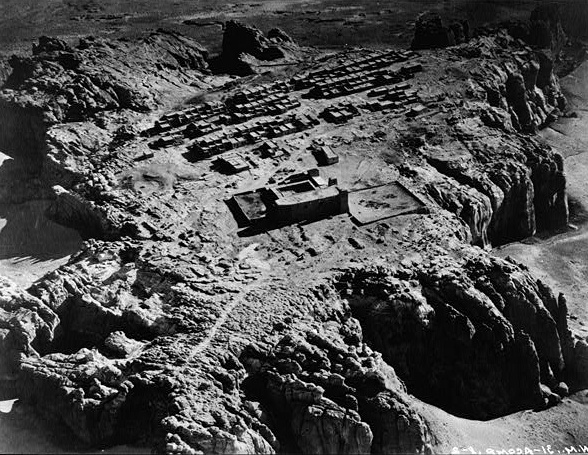 Visual study 02
Later aerial photograph of the historic Acoma settlement
Study the source before reading the analysis
The later photograph preserves a built landscape whose location, density, and paths invite questions about water, defense, household life, and collective labor. It is not direct evidence of conditions in 1491.
Separate visible settlement features from the outside knowledge required to date and interpret them.
European Exploration in the Americas
Why did European powers commit growing resources to exploration and colonization in the Americas?
Atlantic voyages became practical through accumulated navigation, cartography, shipbuilding, and experience along African and island routes. Monarchies and merchants sought direct access to valuable commerce, new taxable resources, strategic advantage, and opportunities to extend Christianity. Conquest in Iberia and plantation experiments on Atlantic islands also supplied institutions and coercive precedents that colonizers carried west.
Political competition turned individual voyages into sustained imperial projects. Once Spain claimed profitable territories, rival states sought their own routes and footholds. Investors accepted risk because fisheries, trade, land, precious metals, and monopoly privileges promised returns, even when early colonies failed. Reports, maps, and returning ships also reduced uncertainty by turning one expedition’s observations into the planning knowledge for the next.
Exploration was therefore a system joining states, private capital, sailors, religious institutions, and coercive power. It also depended on knowledge taken from or shared by African and Indigenous pilots, translators, and intermediaries. Motives varied, and successful navigation did not guarantee settlement or conquest.
Evidence worth keeping
Know what each example demonstrates, not only its name.
Iberian maritime experience
- What happened
- Portuguese voyages along Africa and Atlantic islands developed navigational knowledge, commercial stations, and plantation precedents. Spanish sponsorship of Columbus applied related Atlantic experience to a westward route.
- What it proves
- The 1492 voyage emerged from decades of maritime experimentation and state-backed competition.
- Use it for
- Contextualizing Atlantic expansion and explaining available means.
- Do not overclaim
- Navigation explains capacity, not the separate decisions to conquer, enslave, convert, or settle.
Royal charters and private investment
- What happened
- Monarchies granted companies or proprietors authority to settle, trade, and govern in exchange for extending claims at limited direct cost to the crown. Investors pooled money and distributed risk.
- What it proves
- Colonization could expand through partnerships between public authority and private capital.
- Use it for
- Comparing imperial administration or explaining persistent settlement attempts.
- Do not overclaim
- A charter promised authority on paper but could not supply food, labor, or peaceful relations.
Religious and geopolitical rivalry
- What happened
- Catholic and Protestant powers treated missions and colonies as ways to strengthen confessional and strategic influence. Overseas settlements could threaten rival shipping, claim harbors, and create alliances.
- What it proves
- Religion, commerce, and security reinforced one another rather than operating as isolated motives.
- Use it for
- A multi-causal explanation of colonization.
- Do not overclaim
- Religious language should not be assumed to reveal every participant’s private motive or the practical operation of a colony.
Use on the exam
European exploration expanded because maritime capacity made voyages possible while commercial hopes, religious commitments, and state rivalry made repeated investment politically valuable.
“Gold, God, and glory” is only a memory aid. A strong explanation names institutions, financing, technologies, and the way rivalry sustained expensive failures.
Bottom line: Exploration lasted when institutions could finance risk and turn voyages into strategic or commercial advantage.
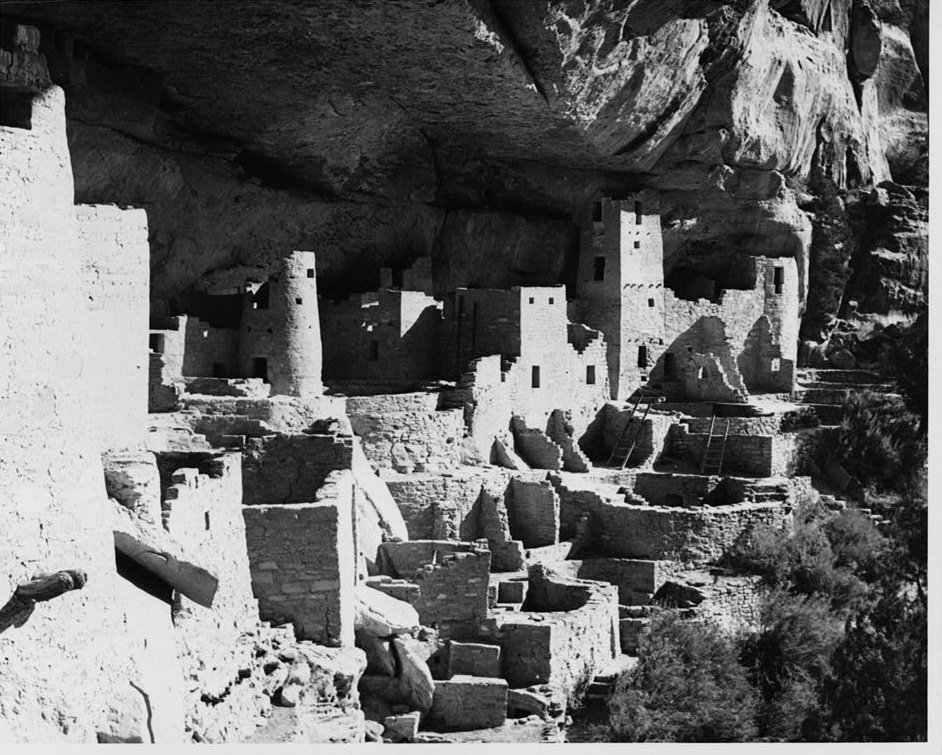 Visual study 03
HABS photograph of Cliff Palace at Mesa Verde, documentation compiled after 1933
Study the source before reading the analysis
Ancestral Pueblo people built Cliff Palace centuries before sustained Atlantic contact. Masonry, multiroom construction, access routes, and close use of the alcove make planning and skilled collective labor visible. The later photograph records surviving architecture after the community had moved, not daily life in 1491.
Which features show deliberate construction in response to terrain, and which claims would still require archaeology or community knowledge?
Columbian Exchange, Spanish Exploration, and Conquest
How did biological exchange and Indigenous alliances help Spain conquer and reorganize parts of the Americas?
The Columbian Exchange moved organisms between ecosystems that had developed separately for thousands of years. American crops entered Afro-Eurasian diets, while Europeans brought animals, plants, and pathogens to the Americas. Disease caused the most immediate demographic disruption because Indigenous populations lacked prior exposure to several infections.
Spanish expeditions exploited that disruption, but military technology alone did not defeat large empires. Conquistadors recruited Indigenous allies with their own grievances and objectives, used interpreters and political intelligence, captured leaders, and inserted themselves into existing tribute systems. Warfare, disease, alliance, and contingency interacted.
Conquest then redirected labor, land, and production toward colonial goals. Catholic missions and Spanish towns became institutional centers, while Indigenous communities preserved languages and practices, challenged abuse, relocated, or incorporated selected religious and economic forms. Introduced grazing animals also altered fields and habitats, so biological exchange changed landscapes as well as populations. Exchange produced mixture and survival as well as catastrophic loss.
Evidence worth keeping
Know what each example demonstrates, not only its name.
Epidemic disease
- What happened
- Smallpox and other diseases spread through communities with no inherited population-level immunity, contributing to severe mortality and political disruption. Epidemics sometimes moved ahead of direct European occupation.
- What it proves
- Biological exchange changed the balance of power even where Europeans were few.
- Use it for
- Causation in conquest and demographic change.
- Do not overclaim
- Disease was decisive but not a conscious military strategy in every outbreak, and exact mortality rates vary by place and source.
Indigenous allies in the fall of the Mexica
- What happened
- Cortés relied on translators and tens of thousands of Indigenous allies, especially enemies or tributaries of Mexica power. These coalitions supplied soldiers, food, local knowledge, and political leverage.
- What it proves
- Conquest resulted partly from existing regional conflicts that Spaniards entered and redirected.
- Use it for
- Challenging technological determinism and restoring Indigenous agency.
- Do not overclaim
- Alliance with Spain did not mean allies sought Spanish colonial rule or understood its long-term consequences.
Transatlantic crops and animals
- What happened
- Maize and potatoes contributed to population growth in parts of Afro-Eurasia, while horses, cattle, wheat, and sugar transformed American land use, diets, transport, and labor demand.
- What it proves
- The exchange had global demographic and environmental effects beyond the sites of conquest.
- Use it for
- Continuity and change, environmental history, or global connection.
- Do not overclaim
- Not every crop spread quickly or benefited all groups; plantation commodities often expanded through coercion.
Use on the exam
Spanish conquest depended on disease and Indigenous coalitions as much as weaponry, while the wider Columbian Exchange reorganized environments and economies on both sides of the Atlantic.
Do not describe the exchange as balanced or voluntary. “Exchange” names movement; it does not measure power, consent, or human cost.
Bottom line: Conquest worked through biological disruption, local politics, and colonial institutions—not a single technological advantage.
Labor, Slavery, and Caste in the Spanish Colonial System
How did Spanish colonizers turn conquest into a durable system of labor and social hierarchy?
Conquest created claims to land and tribute, but colonial profit required a dependable way to organize labor. Spanish authorities adapted Indigenous obligations through encomienda and later repartimiento systems, while mines, estates, and plantations drew workers into production for imperial and Atlantic markets.
Indigenous population loss and expanding commodity demand encouraged the forced migration of enslaved Africans. Colonial officials and elites developed legal categories that connected ancestry, birthplace, status, and honor to unequal access to office, property, and privilege. In practice, classification could be negotiated and varied by region.
Church officials, Indigenous communities, enslaved people, and crown reformers contested abuses without ending coercion. The monarchy sometimes limited private claims to strengthen royal authority. This tension matters: exploitation was not simply disorder at the edge of empire; it became embedded in institutions that different groups also challenged and reshaped.
Evidence worth keeping
Know what each example demonstrates, not only its name.
Encomienda
- What happened
- The crown granted colonists claims to Indigenous tribute or labor while formally requiring protection and Christian instruction. In practice, demands often produced exploitation, displacement, and abuse.
- What it proves
- Colonial extraction could be organized through authority over people rather than outright ownership of land.
- Use it for
- Explaining how conquest became an economic system.
- Do not overclaim
- Encomienda was not identical to chattel slavery, and its operation changed under royal regulation and local resistance.
Silver mining and the repartimiento
- What happened
- Mining centers required large, recurring labor forces and supplies. Colonial authorities compelled Indigenous communities to provide rotating workers, linking local obligations to imperial revenue and global silver flows.
- What it proves
- State power connected coerced labor in the Americas to an international commercial system.
- Use it for
- Labor, empire, commodity chains, or global exchange.
- Do not overclaim
- Mining labor differed across time and place; compulsion existed alongside wage payments, contractors, and other arrangements.
Casta hierarchy
- What happened
- Colonial society assigned political and social meaning to ancestry and birthplace through labels for Europeans, Indigenous peoples, Africans, and people of mixed descent. Status influenced taxation, officeholding, legal treatment, and honor.
- What it proves
- Race became institutionalized through colonial law and social practice rather than merely private prejudice.
- Use it for
- The development of racial hierarchy and comparison with British colonies.
- Do not overclaim
- Casta categories were neither perfectly fixed nor administered uniformly; wealth, reputation, and local practice could complicate them.
Use on the exam
Spanish colonial rule converted military victory into recurring extraction through coerced Indigenous labor, African slavery, and legal hierarchy, while crown policy and local resistance continually modified how those systems operated.
Do not collapse encomienda, repartimiento, and slavery into one institution. Compare who controlled labor, how obligations were enforced, and whether status was legally inheritable.
Bottom line: Colonial hierarchy lasted because law, labor demand, and imperial revenue reinforced one another.
Cultural Interactions Between Europeans, Native Americans, and Africans
Why did cultural interaction produce both adaptation and sustained conflict?
Contact forced people to interpret unfamiliar beliefs, technologies, diseases, and political expectations. Missionaries sought conversion; Native communities evaluated Christianity through existing traditions; Africans carried languages and religious practices across forced migration. Translation changed every exchange because words such as land, sovereignty, work, and faith did not carry identical assumptions.
Material exchange could strengthen Native power for a time. Horses expanded mobility in some regions, metal goods entered established trade, and firearms could alter rivalries. Yet dependence on imported goods, competition for trade, epidemic loss, and settler demand for land often increased conflict and reduced Indigenous bargaining power.
Cultural survival did not require isolation. Communities blended practices, maintained kinship and language, relocated, resisted missions, or used colonial courts and diplomacy. Africans and Indigenous peoples also formed new relationships under colonial rule. The result was neither complete assimilation nor unchanged tradition, but adaptation under unequal pressure.
Evidence worth keeping
Know what each example demonstrates, not only its name.
The Pueblo Revolt
- What happened
- In 1680, Pueblo communities coordinated an uprising that expelled Spanish colonists from New Mexico for more than a decade. Religious repression, labor demands, and colonial violence contributed to the revolt.
- What it proves
- Indigenous cooperation could temporarily reverse colonial rule and force later colonizers to modify policy.
- Use it for
- Resistance, cultural conflict, and limits of imperial control.
- Do not overclaim
- The revolt did not permanently remove Spain, and Pueblo communities did not share one motive or remain politically unified afterward.
Mission communities
- What happened
- Spanish missions combined worship, settlement, labor, and instruction. Native residents could accept selected teachings, preserve practices privately, leave, negotiate obligations, or openly resist clerical authority.
- What it proves
- Religious encounter was a contested institutional process rather than simple conversion or rejection.
- Use it for
- Cultural adaptation and the relationship between belief and power.
- Do not overclaim
- Mission records often reflect clerical viewpoints and cannot be read as transparent evidence of Native belief.
Horses and regional change
- What happened
- Horses introduced by Europeans spread through Indigenous exchange and raiding. On the Plains and elsewhere, some peoples used mounted mobility to hunt, trade, wage war, and reorganize settlement.
- What it proves
- A European-introduced technology could be appropriated to build Indigenous power and new cultural forms.
- Use it for
- Agency, adaptation, or environmental change.
- Do not overclaim
- Mounted Plains cultures developed over time; horses did not affect every nation in the same way or erase older practices.
Use on the exam
Cultural interaction produced conflict where colonial institutions attacked land, labor, or religion, but it also generated selective adaptation as Indigenous and African communities used new goods and institutions for their own purposes.
Avoid using “cultural blending” as if it describes an equal meeting. Always identify who controlled land, law, labor, and the terms of exchange.
Bottom line: Adaptation reveals agency, but agency operates inside changing and often coercive power relationships.
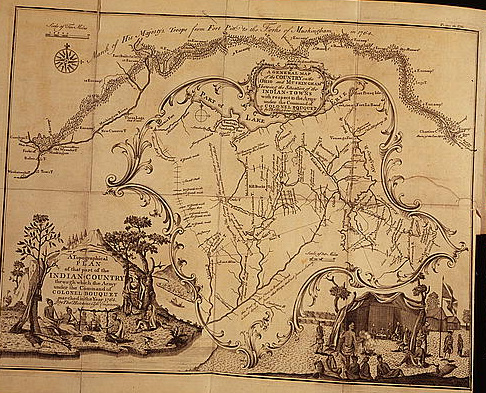 Visual study 04
1764 British map of towns in the Ohio and Muskingum country
Study the source before reading the analysis
The map postdates Period 1 and reflects a British military purpose. It is useful for studying how an empire represented Native geography, not for reconstructing neutral boundaries in 1491.
Which places and routes matter to the mapmaker, and how does military purpose organize the page?
Causation in Period 1
Which combination of causes best explains the transformation of the Americas after 1492?
A strong causal explanation separates enabling conditions, immediate mechanisms, and long-term institutions. Maritime knowledge and state finance enabled sustained voyages. Disease, Indigenous alliances, and military violence helped expeditions defeat particular opponents. Labor systems, missions, migration, and Atlantic commerce then made colonial rule more durable.
The causes also interacted. Epidemic loss could weaken political coordination; alliances gave Spaniards local intelligence and forces; captured tribute systems supplied resources; royal and church institutions justified permanent presence. No one factor explains why conquest moved quickly in some places but colonial control remained thin or contested elsewhere for generations.
Causation should preserve Native and African action. Communities fought, negotiated, fled, rebuilt, converted selectively, and formed new coalitions. Their choices did not cancel the enormous asymmetry produced by disease and Atlantic resources, but they explain regional variation and why colonial institutions had to be repeatedly enforced. Changing the outcome—from battlefield victory to demographic collapse or durable rule—also changes which cause deserves the greatest explanatory weight overall.
Evidence worth keeping
Know what each example demonstrates, not only its name.
Disease as an accelerating cause
- What happened
- Epidemics reduced populations, disrupted leadership and food systems, and created crises that colonizers could exploit. Their effects often compounded warfare and forced migration.
- What it proves
- Biological exchange accelerated conquest and made later extraction easier.
- Use it for
- Ranking causes of early colonial transformation.
- Do not overclaim
- Disease alone cannot explain Spanish strategy, Indigenous alliances, or why some communities retained autonomy.
Alliance as a contingent cause
- What happened
- Spanish forces entered existing political conflicts and relied on Indigenous allies for soldiers, supplies, and knowledge. Different local choices could alter the outcome of a campaign.
- What it proves
- Conquest was contingent on American politics, not predetermined by European arrival.
- Use it for
- Complexity and short-term causation.
- Do not overclaim
- Allies did not control the colonial order that followed, so alliance should not be mistaken for consent to empire.
Labor institutions as a sustaining cause
- What happened
- Encomienda, repartimiento, slavery, missions, and colonial towns organized recurring labor and revenue after military victories. These institutions tied local production to imperial markets and administration.
- What it proves
- Institutions explain how conquest became an enduring colonial system.
- Use it for
- Distinguishing an event from a long-term process.
- Do not overclaim
- Formal rules did not guarantee effective control; resistance, evasion, demographic change, and crown reform altered practice.
Use on the exam
Disease created the largest structural shock, but alliances and coercive institutions explain how Europeans converted disruption into particular victories and then into durable colonial rule.
Do not list causes without assigning each a role. Ask whether a factor enabled contact, accelerated conquest, determined a local outcome, or sustained colonial power afterward.
Bottom line: The best cause depends on the outcome being explained and the time scale of the question.
Choose the evidence that can support the claim
Select the examples you would rely on. This is an evidence check, not a scored question.
Spanish conquest succeeded through a combination of biological disruption, Indigenous alliance, and coercive institutions.
Sample argument
Model thesisContact transformed demography and labor systems most rapidly because epidemic disease and Spanish demands for tribute disrupted communities within decades, while Indigenous political strategies, foodways, and regional identities persisted by adapting to new trade, religious, and military pressures.
- Context: diverse societies already adapted to distinct environments.
- Immediate change: disease and conquest altered population and power.
- Institutional change: colonial labor systems redirected production.
- Continuity and adaptation: Native communities negotiated, resisted, and preserved practices.
- Qualification: outcomes varied with geography, alliances, and colonial reach.
Check what you can explain
Mark an item only when you can explain the cause or relationship without looking back.