Colonial Regions and Atlantic Systems
European colonies developed into distinct regions because climate, crops, migration, labor supply, Indigenous relations, and imperial policy interacted differently. Atlantic exchange connected those regions while slavery and contested land made growth deeply unequal.
- Exam weight
- 6–8%
- Topics
- 8
- Visual studies
- 4
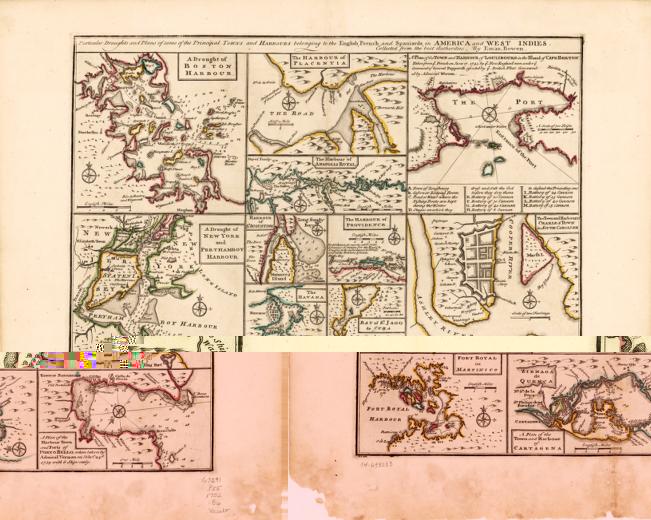
Why did colonial regions become distinct while remaining connected?
Migration, commodities, labor, religion, and Native relations shaped regional development.
Atlantic trade connected households and ports to empire and racial slavery.
Population growth strengthened colonial institutions while intensifying conflict over land and authority.
How the changes connect
- Colonies acquire recurring labor and migrants
- Staples and trade reward regional systems
- Law makes hierarchy durable
- Print and war create intercolonial connections
Compare the cases
| Case | How it worked | What made it distinct |
|---|---|---|
| New England | Family migration and towns | Compact institutions |
| Chesapeake | Tobacco and bound labor | Dispersed plantation society |
| Middle colonies | Grain, ports, and plural migration | Commercial diversity |
Read the chapter image
Which features would matter to a merchant captain, and which would matter to an imperial military planner?
Contextualizing Period 2
Why did seventeenth- and early-eighteenth-century colonies become durable when many earlier settlements had failed?
After 1607, colonies survived by building recurring supplies of labor, food, credit, and migrants. Imperial protection mattered, but settlers also depended on Indigenous trade and knowledge during vulnerable early years. A colony became durable only when households and institutions could reproduce themselves rather than await rescue.
Different empires pursued different combinations of commerce, mission, settlement, and alliance. French and Dutch populations remained relatively small and trade-oriented in many regions, while British migration and agriculture created larger settler populations. Spanish borderlands used missions, forts, and towns to hold extensive claims.
Durability increased conflict over land and labor. Plantation commodities encouraged bound workers; settler population growth narrowed space for negotiated coexistence; imperial wars drew Native nations into shifting coalitions. By 1754, regional societies were distinct but tied to one Atlantic system.
Evidence worth keeping
Know what each example demonstrates, not only its name.
Tobacco and Chesapeake survival
- What happened
- Commercial tobacco created export revenue that attracted investment and migration while increasing demand for land and bound labor.
- What it proves
- A profitable staple could stabilize settlement while producing an unequal social order.
- Use it for
- Use Tobacco and Chesapeake survival as direct support for the topic’s main relationship. Begin with the action or policy, name the people or institution making the choice, and then explain the result: A profitable staple could stabilize settlement while producing an unequal social order. Pair it with French trade alliances if the prompt asks you to weigh more than one cause.
- Do not overclaim
- Tobacco did not make every Chesapeake settler wealthy, and dependence on one crop created risk.
French trade alliances
- What happened
- French traders and missionaries often relied on smaller settlements and relationships with Native suppliers around the Great Lakes and St. Lawrence.
- What it proves
- Low settler density and commercial goals could encourage alliance rather than immediate mass displacement.
- Use it for
- Use French trade alliances as the second piece of evidence in a paragraph built around Tobacco and Chesapeake survival. Compare the actors, institution, and outcome rather than the names of the events. That structure lets the evidence support a defensible inference: Low settler density and commercial goals could encourage alliance rather than immediate mass displacement.
- Do not overclaim
- Trade alliances still produced dependency, rivalry, disease, and imperial pressure.
Family migration to New England
- What happened
- Many New England migrants arrived in family groups and built towns, churches, farms, and local governments.
- What it proves
- Population structure helped colonies reproduce and create stable institutions.
- Use it for
- Bring in Family migration to New England after the main claim is established. Its job is not to reverse the argument automatically, but to identify the group, region, or condition for which the pattern worked differently. Use it to show that population structure helped colonies reproduce and create stable institutions.
- Do not overclaim
- Family settlement did not prevent religious coercion, warfare, or expansion onto Indigenous land.
Use on the exam
Colonies became durable when economic purpose, migration, labor, and political institutions reinforced one another, but the combination varied by empire and region.
Do not explain colonization only through national character; compare population, commodities, land use, labor, and relations with Native nations.
Bottom line: Use these cases to contextualize how colonial institutions became self-sustaining. A sound response should establish the relationship with Tobacco and Chesapeake survival, check it against French trade alliances, and use Family migration to New England only for the limit it can actually prove. State the causal verb directly instead of leaving the reader to infer why the cases belong together.