The Global Tapestry
States across the world faced the same core problems—collect resources, organize people, justify rule—but solved them with different combinations of bureaucracy, tribute, labor systems, religion, and local elites.
- Exam weight
- 8–10%
- Topics
- 7
- Visual studies
- 4
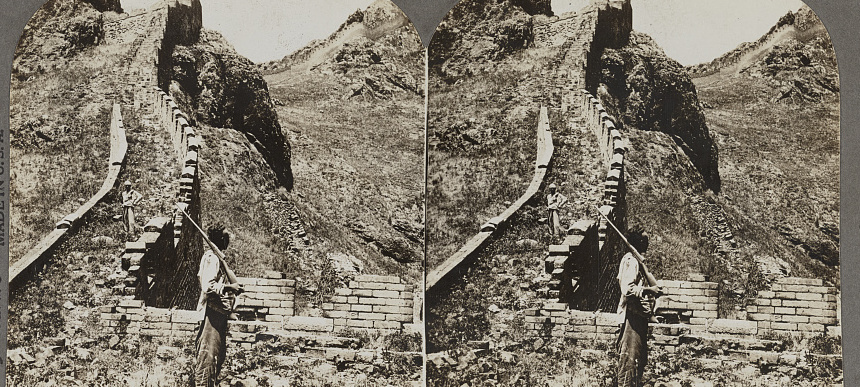
How did states build recognizable political and cultural orders without becoming copies of one another?
Begin with the map, not a list of dynasties. Around 1200, powerful states occupied most major farming regions, but they governed through different combinations of inherited institutions, belief, landholding, taxation, and military service. Song China used a large scholar-official bureaucracy and a commercial economy; Islamic states shared religious and scholarly connections even as political authority fragmented; South and Southeast Asian rulers blended local traditions with Hindu, Buddhist, and Islamic influences; American states organized labor and tribute without Afro-Eurasian animals, metals, or disease environments.
The central pattern is selective borrowing. Korea, Japan, and Vietnam drew on Chinese writing, philosophy, and bureaucratic models, but local elites changed what they adopted. Muslim rulers and scholars carried legal, commercial, and intellectual traditions across a wide zone, yet states from West Africa to Delhi developed in different political settings. Cultural influence therefore did not erase local agency. On the exam, “influenced by” is usually safer and more accurate than “became identical to.”
State power also had a material side. Rulers needed food surpluses, labor, revenue, and ways to communicate commands. Terracing, irrigation, Champa rice, tribute systems, and urban markets helped support population and government. Monumental architecture then made order visible: a palace, temple, mosque, or city plan translated resources into a public claim about who belonged at the center.
How the changes connect
- Agricultural surplus supports denser populations
- Revenue and labor support administration and armies
- Belief and learning make rule intelligible
- Ritual and architecture stage authority in public
Compare the cases
| Case | How it worked | What made it distinct |
|---|---|---|
| Song China | Scholar-official bureaucracy, exams, commercial taxes | Confucian hierarchy joined to major economic growth |
| Islamic world | Multiple states linked by religious, legal, and commercial networks | Shared culture continued despite political fragmentation |
| American states | Tribute and organized labor connected cores to subject regions | Power developed without Afro-Eurasian technologies or animals |
Read the chapter image
What can this structure support as evidence about states, and what can the photograph alone not prove about c. 1200–1450?
Developments in East Asia
How did Song China turn economic growth into stronger central government?
Song China paired a Confucian civil bureaucracy with intense commercial growth. Examinations recruited scholar-officials, while Champa rice, the Grand Canal, paper money, iron production, and large cities expanded the tax base. Korea and Vietnam borrowed Chinese institutions selectively; Japan absorbed cultural influences while warrior elites and a shogun held political power.
Think of Song power as a feedback loop. Faster-ripening rice and better internal transport supported more people and larger markets; commercial taxes then gave the court more resources; educated officials helped the court record, tax, and govern that larger economy. The bureaucracy did not create prosperity by itself, but it made economic growth more usable to the state.
Follow one bag of rice: A farmer can harvest Champa rice earlier and sometimes produce more than one crop. Surplus moves through canals toward a city, where it feeds specialists and enters taxed markets. The state’s canal maintenance and record keeping then make the next round of movement more reliable.
Evidence worth keeping
Know what each example demonstrates, not only its name.
Civil service examinations
- What happened
- Song rulers expanded a Confucian examination system that selected educated men for government service. Successful candidates entered a bureaucracy responsible for taxation, records, law, and local administration, giving the dynasty officials whose careers depended more directly on the imperial state than on hereditary military rank.
- What it proves
- Examinations helped centralize rule by creating a trained administrative class and by giving elite families an incentive to seek status through state institutions.
- Use it for
- State building, centralization, or a comparison with hereditary European nobility.
- Do not overclaim
- The system was not fully meritocratic. Education was expensive, elite families remained advantaged, and personal connections still mattered.
Neo-Confucianism
- What happened
- Song thinkers such as Zhu Xi reworked Confucian ethics while responding to Buddhist and Daoist ideas. The resulting philosophy emphasized hierarchy, education, proper social roles, and moral cultivation. State schools and examinations helped place these principles inside official life.
- What it proves
- A belief system can support political authority by making hierarchy appear ethical and by defining the qualities expected of officials and subjects.
- Use it for
- Legitimacy, cultural continuity, or the political use of belief systems.
- Do not overclaim
- Neo-Confucian influence did not erase Buddhism, Daoism, local religion, or disagreement within Chinese society.
Champa rice and the Grand Canal
- What happened
- Fast-ripening Champa rice spread from Southeast Asia and supported more reliable harvests in parts of southern China. The Grand Canal connected productive southern regions with northern political centers, helping grain, taxes, and commercial goods reach cities and government storehouses.
- What it proves
- Agricultural productivity and transport could enlarge population, markets, and state revenue; economic growth mattered politically when officials could record and move its surplus.
- Use it for
- Causation linking farming, commercialization, population growth, and state capacity.
- Do not overclaim
- Neither rice nor a canal created centralization on its own. Administration, labor, markets, and political choices connected production to the state.
Use on the exam
Song China became more centralized not simply because its economy grew, but because examinations and transport networks allowed the court to convert agricultural and commercial expansion into officials, records, and revenue.
“Influenced by China” does not mean politically identical to China. Japan remained more decentralized.
Bottom line: Production strengthens a state only when institutions can organize and tax it.
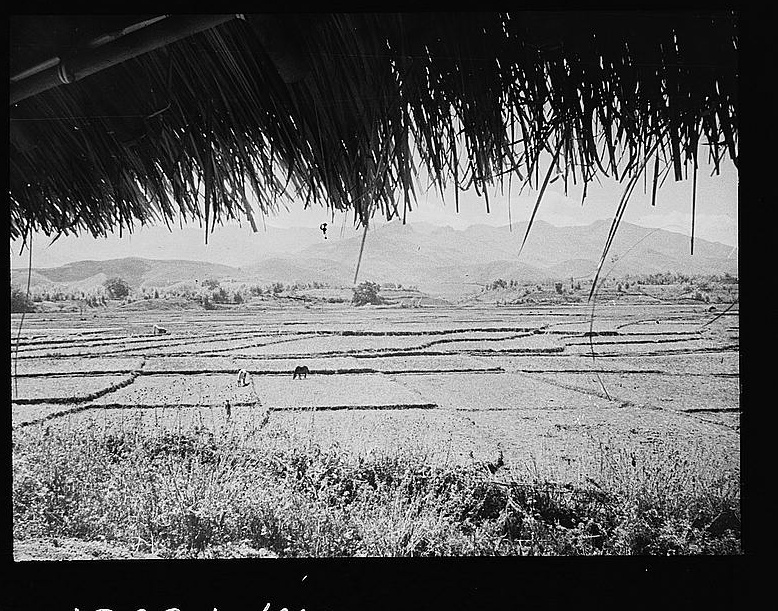 Visual study 02
1944 photograph of rice fields in southwest China
Study the source before reading the analysis
The photograph is much later than the Song period, but it makes the land-and-labor foundation of state capacity visible. Agricultural innovations matter historically when they change surplus, population, markets, or revenue.
Begin with only what is visible, then build a three-link inference from cultivated land to stronger state capacity.
Developments in Dar al-Islam
How could Dar al-Islam remain connected after Abbasid political power weakened?
After Abbasid political power weakened, sultans and regional dynasties ruled separate states. Yet Arabic scholarship, Islamic law, merchants, mosques, schools, and pilgrimage connected a wider cultural zone. Seljuk successor states, the Mamluks, and other rulers could be politically independent while participating in shared religious and intellectual networks.
Separate political authority from civilizational connection. After Abbasid central control weakened, a caliph could retain symbolic religious importance while sultans and dynasties exercised military and fiscal power. Shared law, scholarship, pilgrimage, language, and trade still allowed people in different states to participate in a connected Islamic world.
One network, several rulers: A merchant could move between cities governed by different dynasties and still find mosques, legal specialists, Arabic scholarly texts, and commercial partners. That continuity lowered cultural distance even when armies and tax systems answered to separate rulers.
Evidence worth keeping
Know what each example demonstrates, not only its name.
The decline of Abbasid political control
- What happened
- After the Abbasid caliphs lost effective control over much of their territory, regional dynasties and military rulers governed separate states. The caliphate retained symbolic importance for many Muslims even when taxes, armies, and appointments were controlled elsewhere.
- What it proves
- Political fragmentation can occur without the disappearance of a wider religious or cultural community.
- Use it for
- Continuity and change: centralized rule declined while shared institutions endured.
- Do not overclaim
- “Decline” should refer to Abbasid governing power, not to the end of Islam, trade, scholarship, or urban life.
Sultans and caliphs
- What happened
- A caliph claimed religious and historical authority connected to the Muslim community, while a sultan typically exercised military and political power over a particular state. In practice, arrangements varied, but the distinction helps explain how symbolic and governing authority could be divided.
- What it proves
- Legitimacy and coercive power do not always belong to the same office; rulers can borrow religious recognition while controlling government directly.
- Use it for
- Political fragmentation, legitimization, or comparison with religious authority in Christian Europe.
- Do not overclaim
- Do not treat the titles as fixed job descriptions that worked identically in every dynasty or century.
Sufi and merchant networks
- What happened
- Sufi teachers, scholars, pilgrims, and merchants carried Islamic practices across political borders and into South Asia, Southeast Asia, and sub-Saharan Africa. Mosques, schools, legal traditions, Arabic learning, and commercial relationships linked communities governed by different rulers.
- What it proves
- People and institutions can maintain a connected cultural zone even when no single empire controls it.
- Use it for
- Religious diffusion, trade networks, or cultural continuity across political fragmentation.
- Do not overclaim
- Conversion was gradual and selective. Local customs persisted, and Islamic practice developed differently across regions.
Use on the exam
Although Abbasid central authority fragmented, scholars, merchants, pilgrims, and shared religious institutions continued to connect Muslim societies across several independent states.
Fragmentation did not end Islamic civilization or trade.
Bottom line: Separate governments can still share law, learning, trade, and religious life.
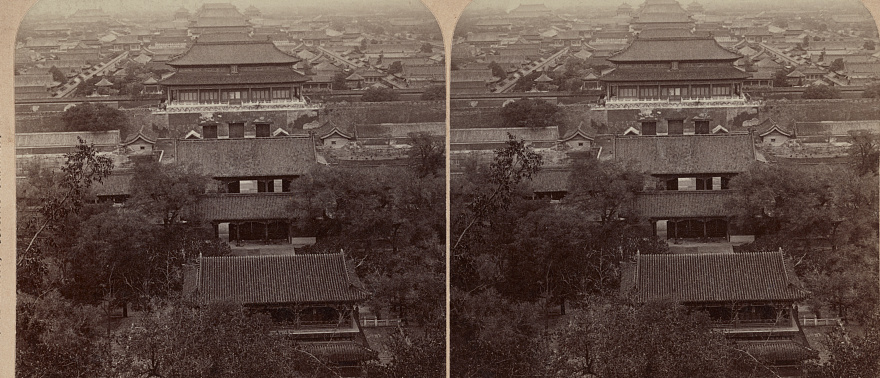 Visual study 03
1901 photograph of an earlier imperial complex
Study the source before reading the analysis
The long central axis, repeated gates, and nested courtyards were built to order movement toward the emperor. The photograph is later than the Ming founding, so it preserves the space—not an eyewitness view of fifteenth-century court life.
Trace the route a visitor would take. Which details make access feel controlled rather than open?
Developments in South and Southeast Asia
How did rulers govern the religious and political diversity of South and Southeast Asia?
The region was religiously and politically diverse. Muslim rulers of the Delhi Sultanate governed many Hindu subjects; Vijayanagara used Hindu court and temple patronage; Bhakti teachers emphasized personal devotion. The Khmer state tied monumental building and water control to authority, while Majapahit benefited from maritime exchange.
South and Southeast Asia are best learned as zones of layered authority. Conquerors rarely erased local institutions; rulers needed revenue and cooperation from communities with established languages, temples, landholding patterns, and devotional traditions. Port states added another layer because wealth could depend more on channeling maritime traffic than controlling a huge interior.
Why accommodation mattered: Delhi Sultanate rulers governed a population in which Muslims were a minority, so political survival required more than conquest. Tax collection, local intermediaries, and selective patronage tied the court to existing society, while Bhakti and Sufi traditions created forms of devotion that crossed or softened some social boundaries.
Evidence worth keeping
Know what each example demonstrates, not only its name.
The Delhi Sultanate
- What happened
- Turkic Muslim dynasties established the Delhi Sultanate over a large population that remained mostly Hindu. Rulers used military force, taxation, Persianate court practices, and local intermediaries, while relations among religious communities ranged from cooperation and patronage to conflict.
- What it proves
- Conquest rarely produces immediate cultural replacement; durable rule requires accommodation with established communities and institutions.
- Use it for
- Religious diversity, state building, or comparison with Mughal administration in Unit 3.
- Do not overclaim
- Do not describe the sultanate as either uniformly tolerant or permanently hostile. Policy and local experience varied.
Vijayanagara and the Bhakti movement
- What happened
- Vijayanagara rulers supported temples and Hindu court culture while governing a commercially connected southern state. At the same time, Bhakti poets and teachers emphasized personal devotion and used regional languages, sometimes challenging the idea that religious access depended entirely on elite ritual learning.
- What it proves
- Political patronage and popular devotion could both strengthen Hindu traditions, but they operated through different institutions and audiences.
- Use it for
- Belief systems, cultural continuity, or comparison between elite and popular religious practice.
- Do not overclaim
- Bhakti was diverse and did not erase caste, temple authority, or other devotional traditions.
Khmer and Majapahit power
- What happened
- The Khmer state used monumental building and extensive water management around Angkor to support royal authority and agriculture. Majapahit, based in Java, drew strength from control of productive land and participation in maritime exchange linking Southeast Asian ports.
- What it proves
- States in the same broad region could build power through different combinations of agriculture, sacred kingship, and trade.
- Use it for
- Comparison, state building, or the relationship between geography and political economy.
- Do not overclaim
- Monuments and court claims may exaggerate a ruler’s reach; neither empire exercised uniform control over every surrounding community.
Use on the exam
South and Southeast Asian rulers maintained authority by combining conquest with local intermediaries, religious patronage, and control of agricultural or maritime resources rather than imposing one uniform culture.
Do not flatten the region into one faith or one empire.
Bottom line: Diversity was a governing problem that produced accommodation, blending, and conflict—not simple replacement.
State Building in the Americas
How did the Mexica and Inca organize conquered peoples in different ways?
The Mexica built a tribute empire centered on Tenochtitlan: conquered communities sent goods while chinampa farming supported the capital. The Inca used the mit’a labor obligation, roads, storehouses, messengers, and quipu to administer the Andes. Both expanded militarily, but they extracted and organized resources differently.
The Mexica and Inca turned conquest into recurring obligations. Mexica rulers generally left local communities in place and demanded goods, which made tribute lists and military enforcement crucial. Inca administration claimed labor time through the mit’a and supported that system with roads, storehouses, messengers, and resettlement. Both were empires, but their extraction systems moved different resources.
A tax is not always money: A Mexica subject community might owe textiles, food, or luxury goods. An Inca community might owe workers for roads, terraces, armies, or state lands. In both cases the obligation connected households to an imperial center, yet the administrative needs were different: inventories for goods versus scheduling and provisioning labor.
Evidence worth keeping
Know what each example demonstrates, not only its name.
Mexica tribute
- What happened
- The Mexica-led Triple Alliance generally left local rulers in place while requiring conquered communities to deliver goods such as food, textiles, feathers, or other regional products. Tribute supported Tenochtitlan and rewarded the political and military elite.
- What it proves
- An empire can rule indirectly by demanding recurring material obligations instead of replacing every local government.
- Use it for
- Resource extraction, indirect rule, or comparison with Inca labor obligations.
- Do not overclaim
- Tribute lists reveal imperial demands more clearly than the amount actually delivered or the daily experience of subject communities.
The Inca mit’a
- What happened
- Andean communities owed periods of labor to the Inca state. Workers built roads, farmed state lands, served armies, and completed public projects; officials organized the labor and redistributed food or goods from state storehouses when needed.
- What it proves
- The Inca extracted labor time rather than relying mainly on money or goods, allowing the state to mobilize people across difficult terrain.
- Use it for
- Labor systems, state capacity, or comparison with later colonial adaptations of Indigenous labor.
- Do not overclaim
- The imperial mit’a involved obligations and redistribution; it should not be treated as identical to the harsher colonial mining draft that reused the name.
Roads, storehouses, and quipu
- What happened
- A large road network carried messengers, armies, officials, and supplies through the Andes. Storehouses reduced the risk of shortages, while quipu recorded numerical and administrative information using knotted cords interpreted by trained specialists.
- What it proves
- Infrastructure and information systems made labor obligations usable by connecting distant communities to imperial planning.
- Use it for
- Administration, communication, or evidence that states can centralize without alphabetic writing.
- Do not overclaim
- Quipu recorded complex information, but scholars should not casually describe it as an alphabet or assume every surviving cord can be read.
Use on the exam
Both the Mexica and Inca extracted resources from conquered peoples, but Mexica rulers emphasized tribute goods while Inca administrators organized labor through roads, storehouses, and record keepers.
Mit’a was labor owed to the state, not a cash tax; quipu recorded information but was not alphabetic writing.
Bottom line: Compare the resource being moved—goods in one system, labor in the other—and the administration each required.
State Building in Africa
How did African states convert trade, production, and belief into political power?
Mali taxed trans-Saharan trade in gold and salt, and Mansa Musa’s pilgrimage displayed wealth and Islamic ties. Ethiopia used an enduring Christian royal tradition. Great Zimbabwe connected inland cattle and gold production to Indian Ocean commerce through regional routes. Local religions remained important alongside imported faiths.
Avoid treating Africa as one political pattern. Mali drew power from taxing and protecting exchange across the Sahara; Great Zimbabwe linked inland production to coastal trade; Ethiopia connected monarchy to a long Christian tradition. Geography shaped opportunity, but rulers still had to build institutions and relationships that converted location or belief into authority.
Mali’s leverage point: Mali did not need to produce every good moving across West Africa. By securing routes and market centers within a gold-producing region, rulers could collect revenue from flows between ecological zones. Mansa Musa’s pilgrimage then converted commercial wealth into diplomatic and religious visibility.
Evidence worth keeping
Know what each example demonstrates, not only its name.
Mali and Mansa Musa
- What happened
- Mali benefited from its position near West African goldfields and trans-Saharan routes. Rulers protected and taxed trade, while Mansa Musa’s pilgrimage to Mecca in 1324 displayed the court’s wealth and connected Mali more visibly to Muslim commercial and scholarly networks.
- What it proves
- A state can gain revenue by controlling exchange points, then use religious patronage and public display to strengthen legitimacy.
- Use it for
- Trade-based state building, Islam in Africa, or the political use of pilgrimage.
- Do not overclaim
- Mali’s population was religiously diverse; a Muslim court did not mean uniform conversion across the empire.
Christian Ethiopia
- What happened
- Ethiopian rulers drew legitimacy from a long Christian tradition connected to the Ethiopian Orthodox Church. Royal claims, churches, and religious institutions helped distinguish the highland kingdom from neighboring Muslim states while supporting internal political identity.
- What it proves
- Religious continuity can provide a durable language of kingship even as surrounding commercial and political conditions change.
- Use it for
- Legitimacy, religious continuity, or comparison with Islamic and Christian states elsewhere.
- Do not overclaim
- Ethiopia also contained Muslim, Jewish, and local religious communities; royal Christianity did not describe every subject.
Great Zimbabwe
- What happened
- Great Zimbabwe grew as a political and commercial center linked to cattle, gold production, and routes leading toward Indian Ocean ports. Its large stone enclosures demonstrate concentrated labor and elite authority within an inland African state connected to overseas exchange.
- What it proves
- Control of production and inland trade could support state power without direct coastal rule.
- Use it for
- African participation in Indian Ocean commerce or material evidence of political organization.
- Do not overclaim
- The stone complex proves organized construction and elite wealth, not the exact borders or population of the state at every moment.
Use on the exam
African states followed several routes to power: Mali taxed exchange, Ethiopian rulers used an established Christian monarchy, and Great Zimbabwe linked inland production to coastal trade.
Islamization was uneven and often strongest among rulers, merchants, and cities.
Bottom line: Choose the African example that matches the mechanism in your claim instead of treating the continent as one case.
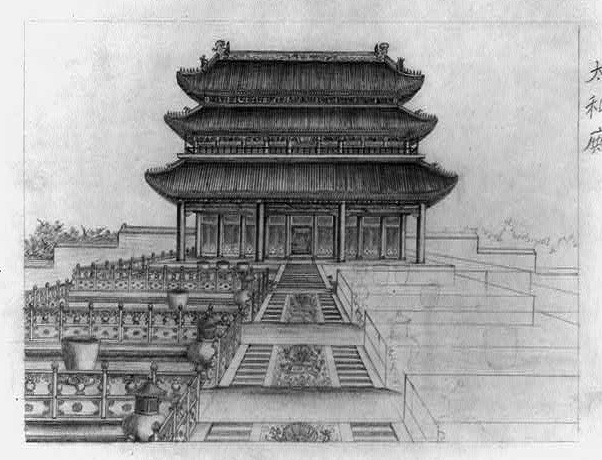 Visual study 04
1860 illustration
Study the source before reading the analysis
The Hall of Supreme Harmony was the ceremonial center of the imperial palace. Scale, elevation, and restricted placement made political hierarchy physical before a ruler spoke.
List one observation about scale, one inference about authority, and one fact the image cannot prove.
Developments in Europe
Why was political authority more dispersed in medieval western Europe than in Song China?
Western European kings shared authority with nobles who controlled land and armed followers. Feudal obligations structured elite relationships, while manors organized local agriculture and peasant labor. The Catholic Church crossed political borders and shaped education and legitimacy. Towns, trade, universities, and royal taxation gradually expanded.
Medieval European decentralization was a distribution of power, not an absence of government. Kings, nobles, towns, monasteries, and the Church held overlapping rights. Feudal ties helped organize military service among elites, while manors structured production and labor locally. Over time, trade and taxation let some monarchies hire officials and reduce dependence on personal obligations.
Two systems that students mix up: A noble promising military service to a superior belongs to the political-military world of feudal relations. Peasants working land and owing rent or labor belong to the manorial economy. They often existed together, but one explains elite bonds and the other explains local production.
Evidence worth keeping
Know what each example demonstrates, not only its name.
Feudal ties among elites
- What happened
- Kings and powerful nobles exchanged land, protection, military service, and personal loyalty through overlapping relationships often described as feudal. Local lords retained armed followers and legal rights, so royal commands depended heavily on negotiation with landed elites.
- What it proves
- Military and landed power remained distributed among nobles, limiting the direct administrative reach of many monarchs.
- Use it for
- Decentralization or comparison with a salaried imperial bureaucracy.
- Do not overclaim
- “Feudalism” is a broad historical model, not one uniform system followed identically across all of Europe.
The manorial economy
- What happened
- Manors organized rural production around estates where peasants owed rent, labor, or dues to landlords. Most daily economic activity was local, although towns and regional markets expanded significantly after 1200.
- What it proves
- Local control of land and labor gave nobles an economic base independent of a central government.
- Use it for
- Economic organization, social hierarchy, or distinction between manorialism and feudal political ties.
- Do not overclaim
- Europe was not economically sealed inside manors; trade, towns, and money use grew throughout the period.
The Catholic Church
- What happened
- The Latin Church maintained institutions, clergy, schools, courts, and property across political boundaries. Popes and bishops could legitimize rulers, challenge them, or mediate disputes, while monasteries and universities preserved learning and trained educated personnel.
- What it proves
- A transregional religious institution could unify culture while also limiting any one monarch’s claim to complete authority.
- Use it for
- Political legitimacy, cultural unity, or comparison with Dar al-Islam.
- Do not overclaim
- The Church was neither politically unified at all times nor separate from secular power; rulers influenced appointments and religious institutions.
Use on the exam
Western European kings shared authority with landed nobles and the Church, whereas Song emperors relied more heavily on officials appointed through a centralized state bureaucracy.
Feudalism and manorialism are related, not identical: one concerns elite political-military ties; the other local economic organization.
Bottom line: European decentralization meant overlapping centers of power, not the absence of government or long-term political change.
Comparison in the Period
What makes a comparison of state systems explanatory rather than descriptive?
Across regions, rulers combined coercion with consent. Bureaucracies, tribute demands, labor obligations, noble alliances, public ritual, religious patronage, and commercial taxes all turned resources into authority. The right comparison identifies a shared category, then explains why the mechanisms differed.
A strong comparison begins with the job every state must perform: obtain resources, coordinate people, defend territory, and make rule appear legitimate. Only then should you compare tools. “Centralized” and “decentralized” are conclusions produced by evidence about who appoints officials, keeps revenue, commands armies, and settles disputes.
Build a comparison from verbs: Song emperors appointed and evaluated officials; Mexica rulers demanded tribute through subject communities; Inca administrators scheduled labor; European kings negotiated with nobles. Those verbs reveal how authority operated and prevent a response from becoming a list of labels.
Evidence worth keeping
Know what each example demonstrates, not only its name.
Centralized and decentralized appointments
- What happened
- Song emperors used examinations and official appointments to connect local administration to the court. In western Europe, hereditary nobles often controlled land, courts, and armed service within their own territories. The contrast concerns who selected officials and where authority rested.
- What it proves
- Centralization can be measured through appointments, revenue, law, and military command rather than asserted as a label.
- Use it for
- Comparison of political systems across regions.
- Do not overclaim
- Neither case was absolute: Chinese elites retained influence, and European monarchies gradually expanded taxation and administration.
Tribute goods and labor obligations
- What happened
- Mexica rulers required goods from subject communities, while Inca officials scheduled labor through the mit’a. Both systems transferred resources from conquered populations to an imperial center, but each required different records, transport, and enforcement.
- What it proves
- A valid similarity can contain a meaningful difference in mechanism.
- Use it for
- Same-problem, different-solution comparison or an argument about imperial extraction.
- Do not overclaim
- Calling both systems “taxes” without identifying goods versus labor removes the analytical distinction.
Religious and administrative legitimacy
- What happened
- Ethiopian monarchs, European kings, Islamic rulers, and Song emperors all linked power to established moral or religious traditions. Song rulers also emphasized a Confucian bureaucracy, while European monarchs negotiated with an institutionally separate Church.
- What it proves
- Rulers commonly seek legitimacy, but the institution delivering it changes how authority operates.
- Use it for
- Comparison of belief systems and political authority.
- Do not overclaim
- Religious legitimacy and administration are not opposites; most states combined sacred claims with material institutions.
Use on the exam
States across the period all extracted resources and justified authority, but their degree of centralization depended on who appointed officials, controlled armed force, and managed obligations.
A similarity without evidence from both sides is incomplete.
Bottom line: Begin with a shared political task, then compare the mechanism used to perform it.
Choose the evidence that can support the claim
Select the examples you would rely on. This is an evidence check, not a scored question.
Monumental space helped rulers make political order visible.
Sample argument
Model thesisAlthough rulers in Song China and western Europe both connected authority to established belief systems, Song emperors exercised more centralized control through a Confucian examination bureaucracy, while European kings relied more on negotiated ties with nobles and the Church because military and landed power remained locally dispersed.
- Context: postclassical states rebuilt authority after earlier empires fragmented.
- Body 1: shared use of belief systems for legitimacy.
- Body 2: Song bureaucracy and tax capacity.
- Body 3: European local elites and negotiated rule.
- Complexity: European monarchies were becoming stronger, so decentralization was a pattern—not an absolute.
Check what you can explain
Mark an item only when you can explain the cause or relationship without looking back.