Now readingIntroduction
0%
AP Biology · Framework 2026-27
Unit 5

Heredity

Inheritance patterns arise from chromosome movement, recombination, probability, gene interaction, and environmental context.

Topics
5

Introduction

Inheritance patterns arise from chromosome movement, recombination, probability, gene interaction, and environmental context.

Meiosis supplies the physical mechanism: homologs and chromatids separate in different divisions while crossing over and assortment create variation.

Probability predicts distributions, but linkage, allele interaction, multiple loci, and environment determine which simplified model fits the evidence.

01
meiosis

segregation and ploidy

02
crossing over plus assortment

genetic diversity

03
allele probabilities

offspring distributions

04
genotype plus environment

phenotype

Current exam guidance: Aligned to the current 2026–27 AP Biology course framework, including scientific practices, data analysis, and model-based reasoning.
5.1

Meiosis

How does meiosis reduce chromosome-set number while allowing its haploid products to differ genetically?

Short answer

One DNA replication is followed by homolog separation in meiosis I and sister-chromatid separation in meiosis II, producing haploid products whose allele combinations can differ.
Know firstCell cycle · Homologous chromosomes · Chromosome counting

The two divisions separate different relationships

Before meiosis, S phase duplicates each chromosome. Homologous chromosomes pair during meiosis I; each homolog contains two sister chromatids. The first division separates homologs, so each resulting cell receives one member of each pair and becomes haploid. Sister chromatids remain joined at this stage.

No second DNA replication occurs before meiosis II. The second division separates sister chromatids, yielding four products. The products need not be genetically identical because crossing over and chromosome orientation can create different combinations. Meiosis changes ploidy in division I; it does not halve the DNA sequence within each chromosome.

Scientific source
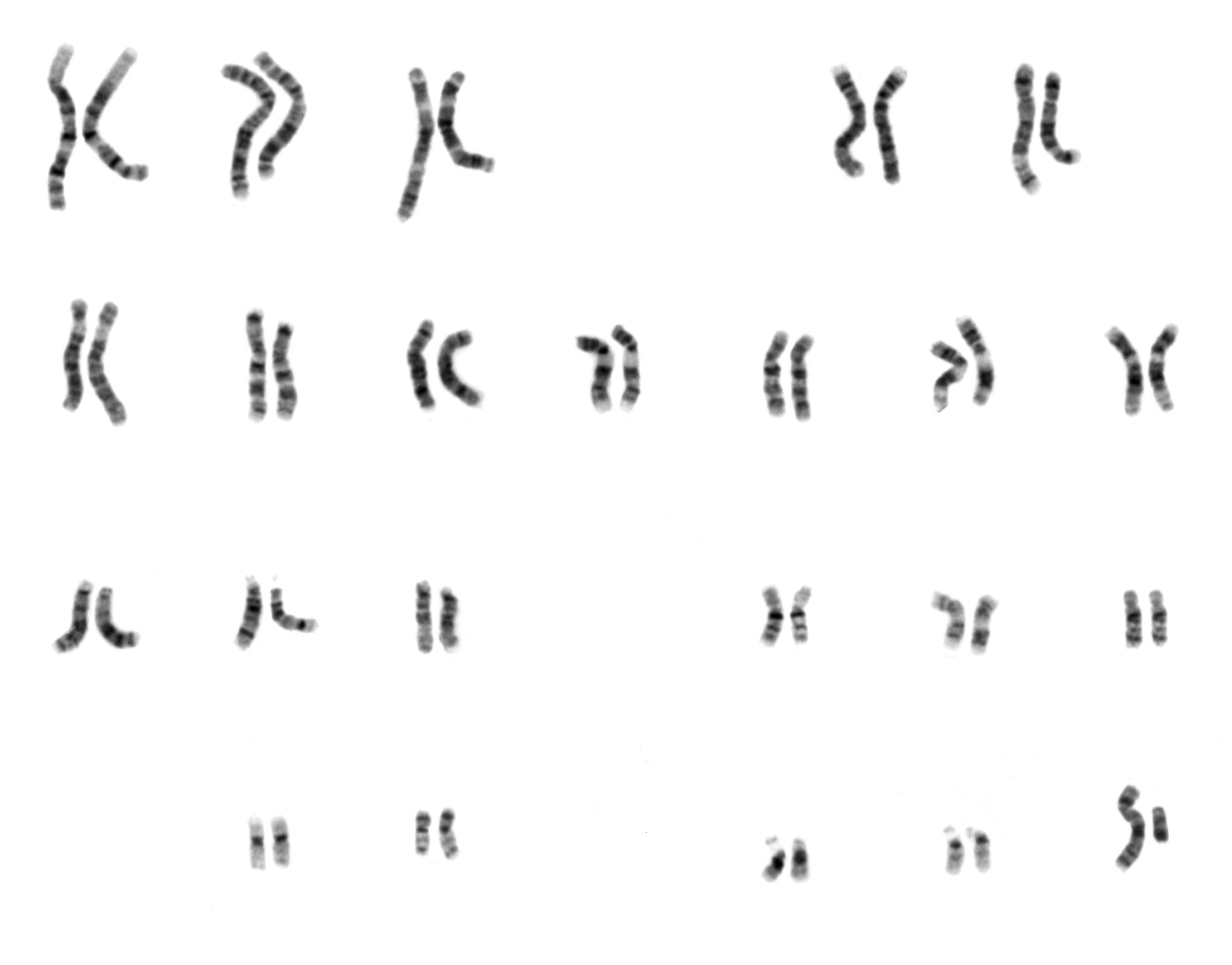
Grayscale human karyotype arranging chromosomes into homologous pairs

A karyotype makes homologous pairs visible

A karyotype groups chromosomes by size, banding pattern, and centromere position. It makes homologous pairs visible before meiosis, but it cannot show the sequence-level differences or crossover history inside each chromosome.
Use this visual to see
Identify homologous pairs while separating chromosome count from DNA sequence.
What it cannot show
The image arranges a human chromosome set into labeled pairs. Banding helps match homologs; the view is a prepared cytogenetic record rather than chromosomes arranged this way inside a cell.

U.S. National Human Genome Research Institute · Public domain (NIH) · Wikimedia Commons item record

Audit a 2n = 6 cell through two divisions

Replication creates sisters; sequential separation of homologs and then sisters reduces sets while conserving replicated DNA across products.

Homologs separate before sistersTrack ploidy, chromosomes, and DNA independently.
G1
cells
1
ploidy
2n
chromosomesPerCell
6
dnaUnitsPerCell
6
after S
cells
1
ploidy
2n
chromosomesPerCell
6
dnaUnitsPerCell
12
after I
cells
2
ploidy
n
chromosomesPerCell
3
dnaUnitsPerCell
6
after II
cells
4
ploidy
n
chromosomesPerCell
3
dnaUnitsPerCell
3

Non-color encodings: homologs use distinct hatch patterns; joined sisters share a centromere mark; counts are printed

Entities

  • three homolog pairs
  • sister chromatids
  • four products

Rules

  • One S phase precedes both divisions.
  • Meiosis I separates homologs.
  • Meiosis II separates sisters.
Audit a 2n = 6 cell through two divisions states
StateidcellsploidychromosomesPerCelldnaUnitsPerCell
1G112n66
2after-S12n612
3after-I2n36
4after-II4n33
Teaching figure
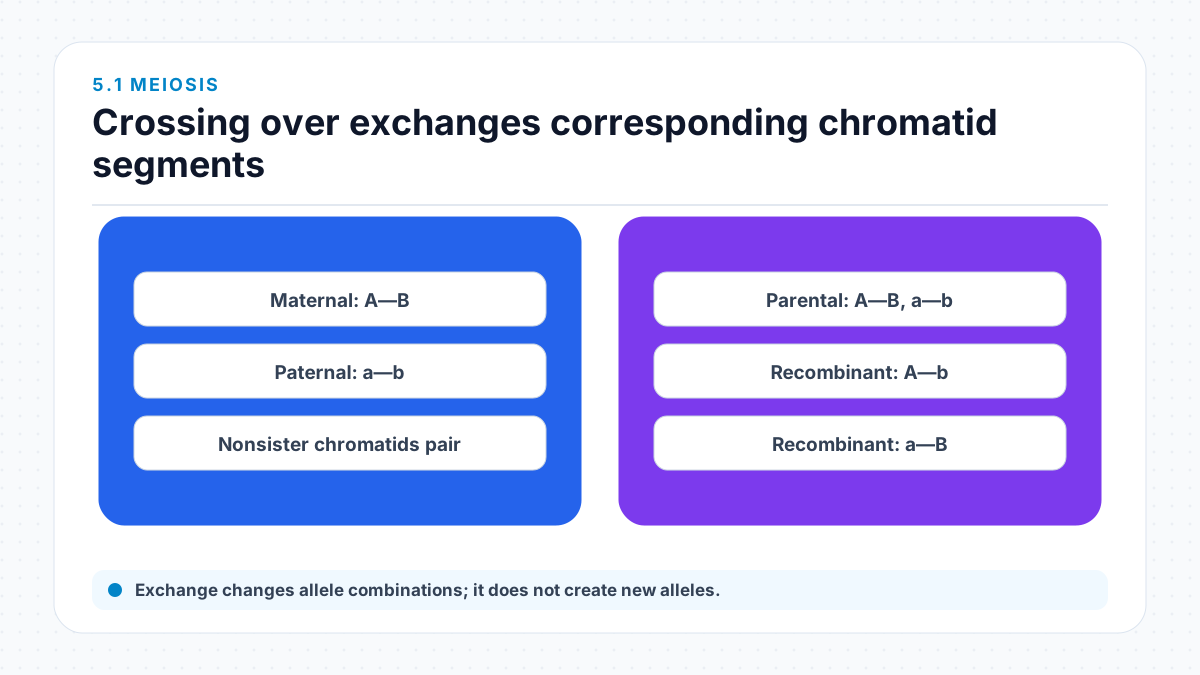
Before-and-after diagram of segment exchange between nonsister chromatids

Crossing over reshuffles linked alleles

Paired homologs can exchange corresponding segments between nonsister chromatids. The result retains parental chromatids and creates recombinant chromatids with new combinations of the same alleles.

Use this visual to see
Locate the exchange and distinguish recombination from mutation.
What it cannot show
Two panels show AB and ab chromatids before exchange and AB, ab, Ab, and aB outcomes afterward. The straight segments omit chromosome packing and the molecular steps of break repair.

Test Ninjas · Original educational diagram

Name what separates

DivisionStructure separatedPloidy result
meiosis Ihomologous chromosomes2n to n
meiosis IIsister chromatidsn remains n

Keep these three ideas

  • One replication precedes two divisions.
  • Meiosis I separates homologs and reduces ploidy.
  • Meiosis II separates sister chromatids.

Keep reading Unit 5: Heredity

You just read the first topic free. Your free trial opens the rest of this unit, every AP Biology unit, and all 19 AP courses.

  • 5.1 MeiosisRead
  • 5.2 Meiosis and Genetic Diversity
  • 5.3 Mendelian Genetics
  • 5.4 Non-Mendelian Genetics
  • 5.5 Environmental Effects on Phenotype
Start my free 7 days →$0.00 due today · cancel anytime · score guarantee

Practice AP Biology in the real test engine.

Free practice set: timed, the same engine as our full-length tests, every answer explained.