Now readingIntroduction
0%
AP Biology · Framework 2026-27
Unit 7

Natural Selection

Evolutionary change is population change produced by mutation, inheritance, sampling, gene flow, and differential reproductive contribution.

Topics
12

Introduction

Evolutionary change is population change produced by mutation, inheritance, sampling, gene flow, and differential reproductive contribution.

Begin with allele or phenotype distributions, then identify the mechanism capable of changing them. Selection is nonrandom with respect to heritable fitness differences; drift is sampling; gene flow is movement; mutation supplies new sequence.

Evidence for descent is strongest when independent fossil, anatomical, biogeographic, and molecular records agree. Trees summarize hypotheses and must be read by nodes rather than visual tip order.

01
heritable variation plus fitness difference

natural selection

02
sampling and movement

drift and gene flow

03
shared derived characters

phylogeny

04
reduced gene flow

speciation

Current exam guidance: Aligned to the current 2026–27 AP Biology course framework, including scientific practices, data analysis, and model-based reasoning.
7.1

Introduction to Natural Selection

How does unequal reproductive contribution change a population across generations?

Short answer

When heritable phenotypes differ in reproductive success in a stated environment, their associated alleles become differently represented in the next generation.
Know firstHeritable variation · Allele frequency · Reproductive success

Selection sorts existing variation

Individuals in a population already differ before a selective episode. If part of that variation is heritable and affects survival through reproduction, individuals contribute unequal numbers of descendants. Selection acts through phenotypes, but the population-level result is a change in inherited trait or allele distribution. Fitness therefore means relative reproductive contribution in a particular environment, not strength or longevity alone.

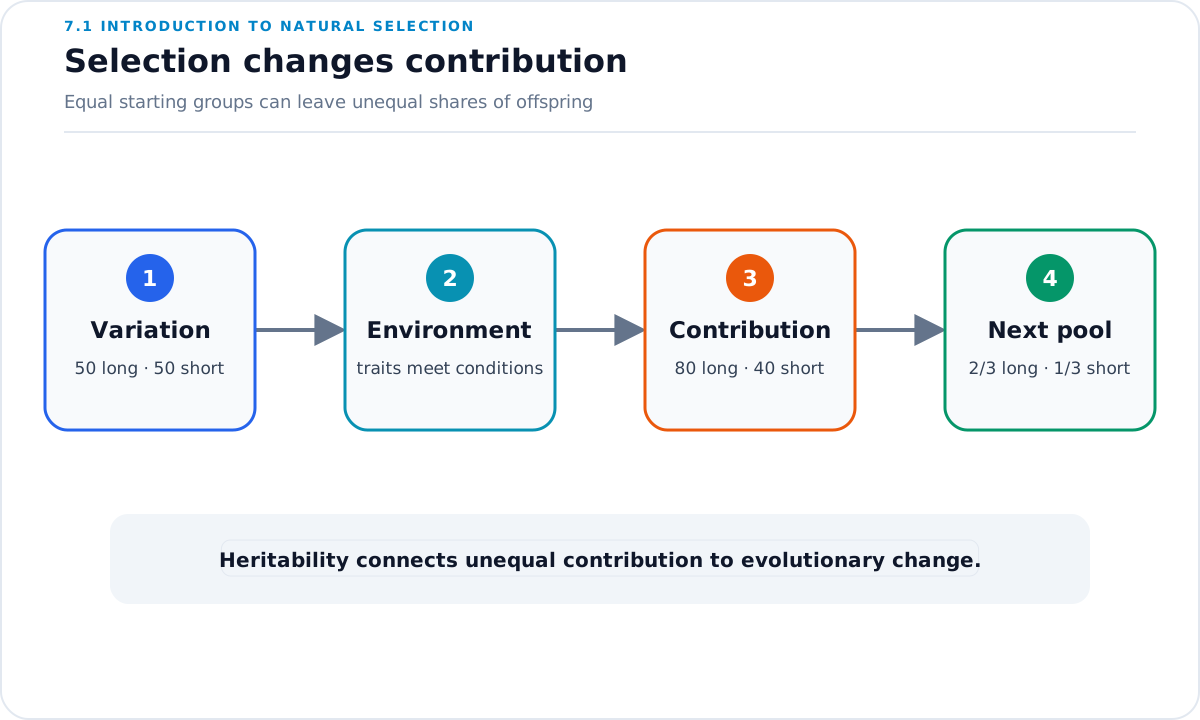
Acclimation changes one individual within its lifetime and is not population evolution. A new environment also does not cause organisms to manufacture the alleles they need. In the model, long and short phenotypes begin equally common, yet contribute 80 and 40 offspring. The next pool is two-thirds long-associated and one-third short-associated; the evidence supports differential contribution, not purposeful change.

Teaching figure
Four-stage diagram moving from equal standing variation through environmental conditions and unequal offspring contribution to a changed next-generation pool.

Selection changes who contributes descendants

The parental groups begin equally represented, but their offspring do not. The diagram keeps the starting population separate from reproductive contribution so selection is not mistaken for an individual changing during life.

Use this visual to see
Follow the population-level mechanism from inherited variation to the next generation.
What it cannot show
The diagram assumes the phenotype difference is heritable and does not identify the ecological cause of unequal reproduction.

Test Ninjas · Original educational diagram

Follow contribution into the next generation

Unequal reproductive contribution shifts the inherited phenotype distribution between generations.

Unequal contribution changes population compositionConnect standing variation to offspring fractions.
parents
long
50
short
50
total
100
offspring
long
80
short
40
total
120

Non-color encodings: solid L bars; hatched S bars; all counts printed

Entities

  • 50 long-phenotype adults
  • 50 short-phenotype adults
  • 120 offspring

Rules

  • Starting abundance and offspring contribution are separate counts.
  • Fractions use total offspring as denominator.
  • Heritability is required for evolutionary interpretation.
Follow contribution into the next generation states
Stateidlongshorttotal
1parents5050100
2offspring8040120

Require all parts of the mechanism

EvidenceRole
phenotypic variationselection can distinguish individuals
heritabilitydifferences can pass to descendants
unequal offspringpopulation representation can change

Keep these three ideas

  • Variation precedes selection.
  • Heritability links phenotype sorting to population change.
  • Fitness is contextual reproductive contribution.

Keep reading Unit 7: Natural Selection

You just read the first topic free. Your free trial opens the rest of this unit, every AP Biology unit, and all 19 AP courses.

  • 7.1 Introduction to Natural SelectionRead
  • 7.2 Natural Selection
  • 7.3 Artificial Selection
  • 7.4 Population Genetics
  • 7.5 Hardy–Weinberg Equilibrium
  • 7.6 Evidence of Evolution
  • 7.7 Common Ancestry
  • 7.8 Continuing Evolution
  • 7.9 Phylogeny
  • 7.10 Speciation
  • 7.11 Variations in Populations
  • 7.12 Origins of Life on Earth
Start my free 7 days →$0.00 due today · cancel anytime · score guarantee

Practice AP Biology in the real test engine.

Free practice set: timed, the same engine as our full-length tests, every answer explained.