Cognition
Cognition turns selected sensory input into organized perceptions, decisions, memories, and measurements whose strengths and limits can be tested.
- Exam weight
- 15–25%
- Topics
- 8
Introduction
Cognition turns selected sensory input into organized perceptions, decisions, memories, and measurements whose strengths and limits can be tested.
This unit connects perception, thought, memory, and intelligence through one recurring idea: the mind does not copy information. It selects, organizes, stores, reconstructs, and evaluates information under limited attention and uncertainty.
For each process, separate performance from mechanism. A person’s response is observable; attention, memory trace, heuristic, or latent ability is an explanatory model. Strong evidence compares predictions and states what the design cannot establish.
perception
judgment and problem solving
retrieval
test interpretation
Perception
How does the mind organize sensation into perceived objects and events?
Bottom-up features interact with attention, expectation, context, and learned regularities to produce useful but fallible interpretations.
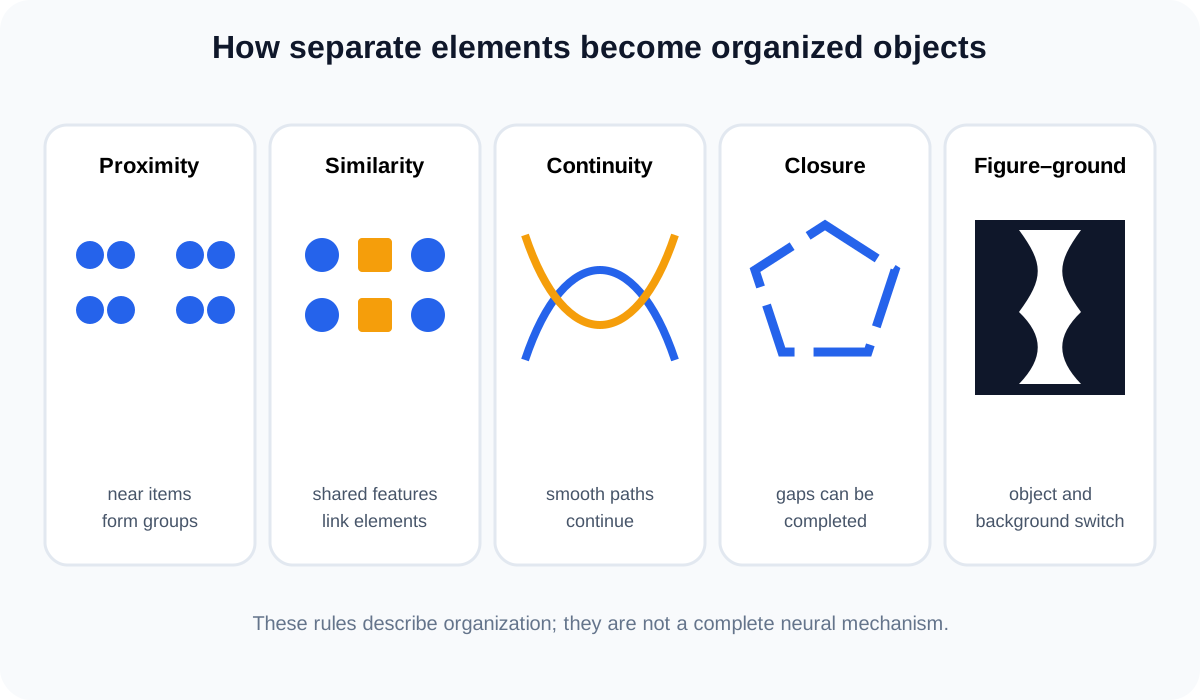
The same elements can organize into different objects
Perception groups elements using regularities that usually help identify objects. Changing spacing or context can change the organization without changing each element.
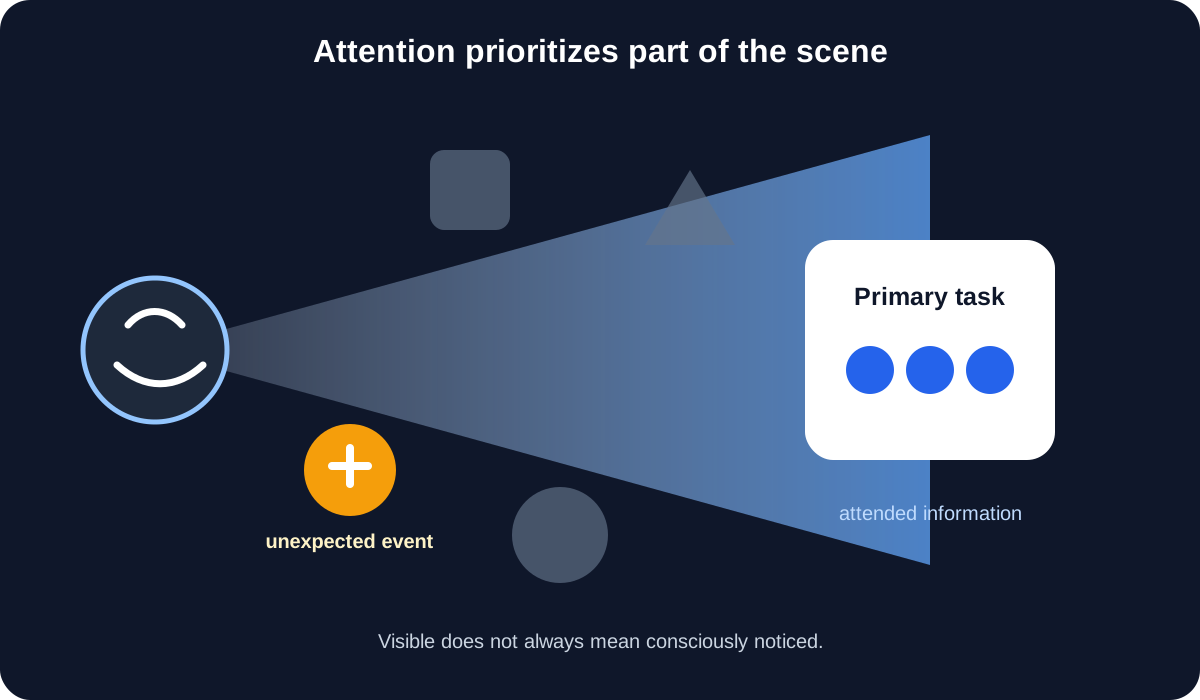
Attention selects; it does not record everything
A demanding task concentrates processing on selected input. An unexpected event may remain unnoticed even when it is visible.