Development and Learning
Development is change across the lifespan, not a timetable that every person follows identically. Researchers compare people and cohorts with designs whose limits determine whether a result supports age difference, within-person change, or a causal claim.
- Exam weight
- 15–25%
- Topics
- 9
Introduction
Development is change across the lifespan, not a timetable that every person follows identically. Researchers compare people and cohorts with designs whose limits determine whether a result supports age difference, within-person change, or a causal claim.
Biology, experience, culture, and current context work together in physical, cognitive, language, and social-emotional development. Stage and attachment theories organize evidence, but they do not assign a fixed destiny to one person.
Learning changes behavior or knowledge through associations, consequences, observation, and cognition. Classical and operant conditioning answer different questions, while biological preparedness, expectations, and opportunity explain why learning is more than a mechanical response to rewards.
Themes and Methods in Developmental Psychology
How can researchers tell developmental change from cohort or measurement differences?
They match a developmental question to longitudinal, cross-sectional, or sequential evidence and keep causal claims within what that design can establish.
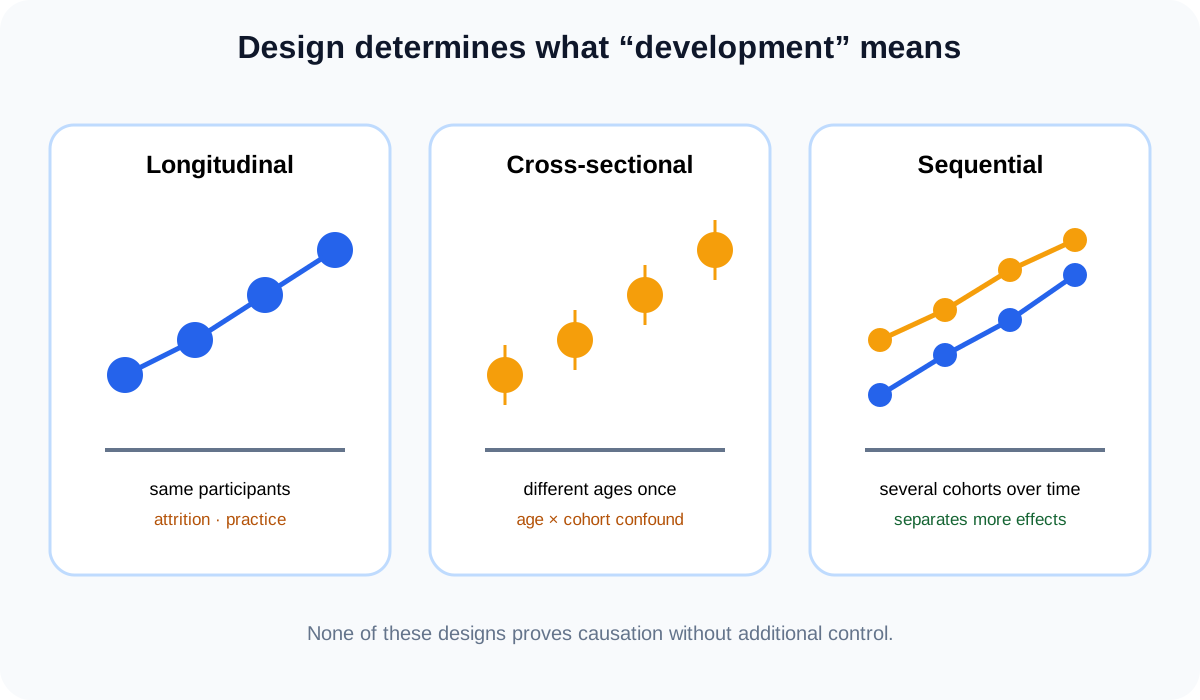
Developmental designs answer different time questions
Longitudinal research follows the same people; cross-sectional research compares ages at one time; sequential designs combine cohorts and repeated measurement.