Social Psychology and Personality
Behavior reflects a changing relationship among person, situation, goals, interpretation, and culture.
- Exam weight
- 15–25%
- Topics
- 7
Introduction
Behavior reflects a changing relationship among person, situation, goals, interpretation, and culture.
This unit begins with judgments about people, then moves outward to persuasion and social influence before comparing theories of personality, motivation, and emotion.
Across the unit, distinguish a construct from its measurement and a group tendency from a prediction about one person. Context changes probability; it rarely makes behavior inevitable.
how people interpret and evaluate
how norms, information, authority, and responsibility alter action
how enduring tendencies and changing processes work together
Attribution Theory and Person Perception
How do people explain behavior and form impressions of others?
People combine information about a person with information about the situation, but attention, expectations, perspective, and culture can tilt the explanation they choose.
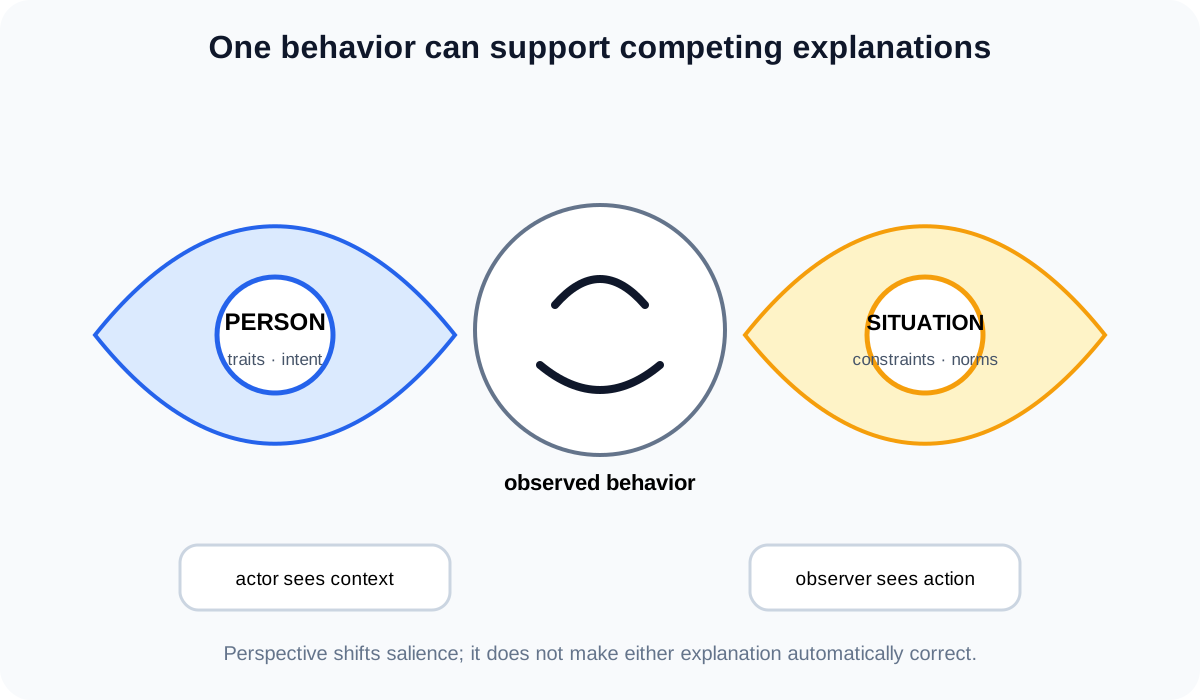
Attribution changes with the observer’s lens
Explanations depend on which information is salient and available. A behavior alone rarely identifies whether disposition or context dominated.