Revolution and the New Republic
Imperial victory produced a dispute over revenue and authority that became a revolution. Independence opened a second struggle over republican government, federal power, citizenship, rights, and the unresolved place of slavery and Indigenous sovereignty.
- Exam weight
- 10–17%
- Topics
- 13
- Visual studies
- 4
How did an imperial dispute become a constitutional revolution?
Postwar debt and territory changed Britain’s administration of its colonies.
Resistance networks turned taxation into a dispute over sovereignty and eventually independence.
The new republic increased national capacity while bargaining over representation, slavery, and rights.
How the changes connect
- War changes imperial costs
- Reform collides with colonial institutions
- Mobilization and alliance win independence
- Constitutional bargaining builds a republic
Compare the cases
| Case | How it worked | What made it distinct |
|---|---|---|
| Articles | State-centered union | Weak dependable revenue |
| Constitution | Direct national powers | Checks, federalism, and compromise |
| Bill of Rights | Specified restraints | Ratification opposition changes the settlement |
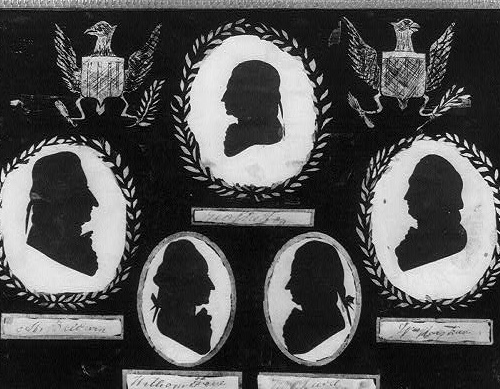
Read the chapter image
How does the arrangement turn individual delegates into a collective founding generation, and whose political role disappears?
Contextualizing Period 3
Why did the imperial relationship become unstable after 1754?
British colonies had grown populous, commercially connected, and accustomed to elected assemblies, while Native diplomacy still constrained expansion beyond the Appalachians. The Seven Years’ War upset that balance.
Victory removed France from mainland competition but left Britain with debt, new territory, and the costs of defense. Officials sought revenue and administrative control; colonists defended local taxation and wartime expectations.
The crisis was not inevitable. Disagreement became revolutionary as enforcement, protest, violence, and competing ideas about representation repeatedly narrowed space for compromise.
Evidence worth keeping
Know what each example demonstrates, not only its name.
Colonial self-government
- What happened
- Assemblies regularly raised taxes and appropriated money before 1763.
- What it proves
- Colonists had institutional reasons to resist parliamentary taxation.
- Use it for
- Colonial self-government works best near the start of an evidence paragraph. Establish when and where it occurred, then use the example to show that colonists had institutional reasons to resist parliamentary taxation. Follow it with Imperial war debt to distinguish the immediate development from the system that made it matter.
- Do not overclaim
- Colonial self-government shows that Colonists had institutional reasons to resist parliamentary taxation. It remains one bounded example and cannot represent every region or group.
Imperial war debt
- What happened
- Britain borrowed heavily to fight a global war and defend expanded territory.
- What it proves
- Victory created fiscal pressures that changed policy.
- Use it for
- Pair Imperial war debt with Colonial self-government. Hold the question constant—power, labor, citizenship, markets, or another relevant category—and explain whether the second case confirms the same mechanism or changes it. The useful inference is that victory created fiscal pressures that changed policy.
- Do not overclaim
- Imperial war debt shows that Victory created fiscal pressures that changed policy. It remains one bounded example and cannot represent every region or group.
Native borderlands
- What happened
- Native nations remained powerful around the Ohio Valley and Great Lakes.
- What it proves
- Western policy involved sovereignty and security, not vacant land.
- Use it for
- A qualified paragraph can end with Native borderlands. Contrast its setting or outcome with Colonial self-government, then state what the difference prevents you from claiming. The evidence still belongs in the argument because western policy involved sovereignty and security, not vacant land.
- Do not overclaim
- Native borderlands shows that Western policy involved sovereignty and security, not vacant land. It remains one bounded example and cannot represent every region or group.
Use on the exam
The postwar crisis arose when British fiscal and security reforms collided with colonial institutions and expansion, then escalated through political choices.
Do not treat 1763 as a moment when colonists already wanted independence.
Bottom line: Build the paragraph around the relationship between Colonial self-government and Imperial war debt; use Native borderlands to qualify how widely the explanation applies. Test the thesis against all three cases. It should explain Colonial self-government and Imperial war debt without making a claim that Native borderlands clearly contradicts. Revise any sentence that treats one example as proof for every region or group.