Globalization
Faster transport, digital communication, market integration, and global institutions intensified connection. These systems spread goods and culture while also transmitting disease, environmental costs, financial shocks, inequality, and organized resistance.
- Exam weight
- 8–10%
- Topics
- 9
- Visual studies
- 4
What became genuinely global after 1900—and why did connection produce both coordination and conflict?
Late-twentieth-century globalization accelerated older forms of connection. Container standards, jet transport, satellites, computing, finance, and trade rules let firms coordinate production and markets across long distances. Multinational corporations could place design, components, assembly, and sales in different countries. The key change was not that trade suddenly began, but that speed, scale, coordination, and institutional reach intensified.
States did not disappear. Governments built infrastructure, negotiated rules, protected industries, opened or restricted capital flows, and managed welfare and labor policy. International institutions coordinated health, security, finance, and development, yet their authority and representation remained contested. Globalization is therefore not a force outside politics; political choices shape who can move, invest, work, and absorb risk.
Connection generated counter-networks too. Labor, environmental, feminist, Indigenous, democracy, and human-rights movements organized across borders, often using the same communication systems as corporations and states. Climate change and pandemics reveal shared vulnerability while exposing unequal capacity. For the exam, replace “technology made the world smaller” with a traceable mechanism and a distributional question: which technology connected which actors, and who gained leverage or faced new exposure?
How the changes connect
- Standards and digital systems lower coordination costs
- Firms distribute production and finance across borders
- States and institutions write rules for movement and risk
- Social movements use the same networks to demand accountability
Compare the cases
| Case | How it worked | What made it distinct |
|---|---|---|
| Earlier exchange | Goods and people move through slower, segmented networks | High cost and limited information constrain coordination |
| Late-century globalization | Production, capital, and information coordinate near-continuously | Standards and computing integrate distant stages |
| Counter-globalization | Movements connect across borders to challenge harms or exclusions | Connection creates resistance as well as commerce |
Read the chapter image
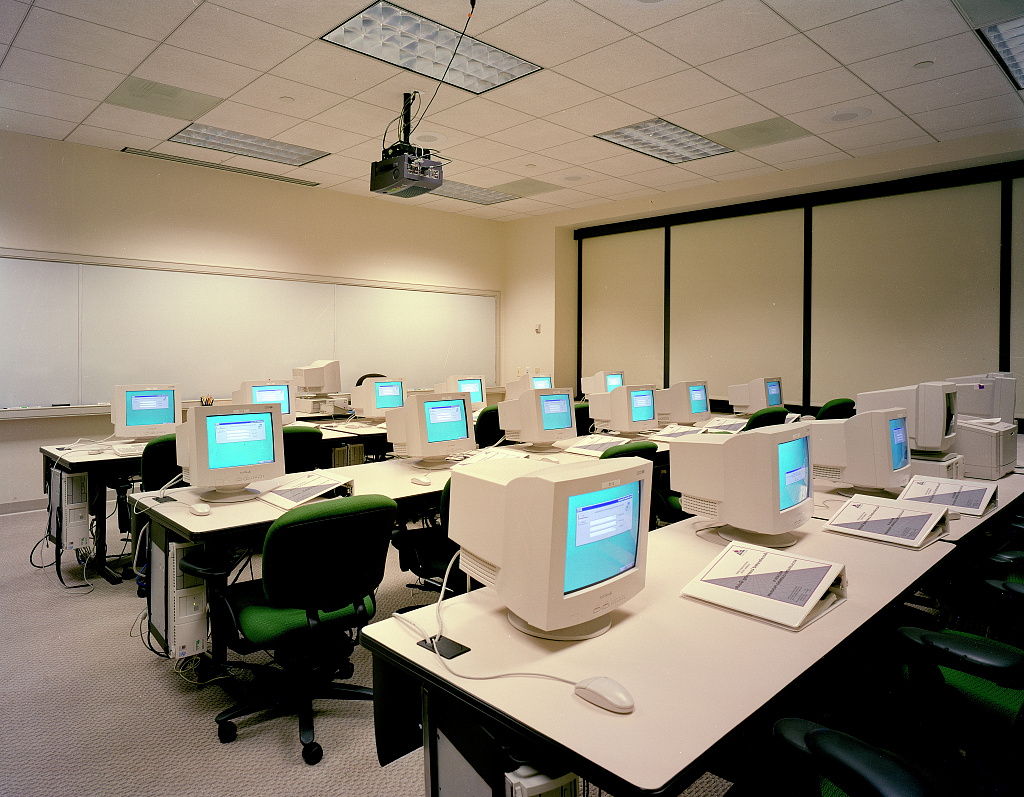
What resources beyond the machines are required for this technology to widen opportunity rather than deepen a digital divide?
Advances in Technology and Exchange
Which costs did late-twentieth-century technologies reduce, and what new networks followed?
Container shipping, jet aircraft, satellites, fiber-optic cables, mobile phones, and the internet cut the cost and time of moving goods, people, information, and money. Firms split production across countries, while individuals joined transnational communities in real time.
Late-twentieth-century technology reduced the cost of moving information, goods, and people. Container standards sped transfers between ships, trains, and trucks; jet travel compressed time; satellites and fiber networks expanded communication; computing coordinated inventory and finance. The result was tighter synchronization across distance.
Standardization is an invisible technology: A container’s power lies less in the metal box than in shared dimensions, cranes, documents, ports, and vehicles built around it. Standards reduce repeated handling and uncertainty, allowing firms to plan a chain across several countries as one process.
Evidence worth keeping
Know what each example demonstrates, not only its name.
Containerization
- What happened
- Standard metal containers move between ships, trains, and trucks without unpacking the goods at each transfer. Standard dimensions, cranes, ports, schedules, documents, and computer tracking sharply reduced handling time, theft, and freight cost.
- What it proves
- A shared technical standard can reorganize factories, ports, and supply chains even when the object itself appears simple.
- Use it for
- Global production, trade growth, or comparison with earlier transport systems.
- Do not overclaim
- Containerization still depends on expensive ports, chokepoints, labor, fuel, and inland infrastructure; it did not make location irrelevant.
Jet travel
- What happened
- Commercial jets reduced intercontinental travel time for passengers, migrants, tourists, managers, and high-value cargo. Airports and airline networks connected cities more directly while concentrating movement through major hubs.
- What it proves
- Faster travel expanded face-to-face coordination and temporary mobility alongside permanent migration.
- Use it for
- Technological change, tourism, migration, or the spread of disease.
- Do not overclaim
- Access remained unequal because tickets, visas, airports, and political borders continued to restrict movement.
Internet and mobile communication
- What happened
- Fiber-optic cables, satellites, computing, and mobile networks allowed information and financial instructions to move almost instantly. Firms coordinated inventories and design across countries, while families, activists, and cultural producers maintained transnational contact.
- What it proves
- Digital networks reduced the cost of communication and coordination rather than the physical cost of producing every good.
- Use it for
- Global supply chains, transnational culture, or movement organization.
- Do not overclaim
- The internet relies on physical infrastructure, corporate platforms, electricity, regulation, language, and unequal access.
Use on the exam
Containers reduced the cost of handling goods, jets reduced travel time, and digital networks reduced communication delay, allowing production and communities to coordinate across greater distance.
Technology does not erase geography; ports, cables, regulation, and chokepoints still matter.
Bottom line: State exactly which cost fell and which behavior became practical as a result.
 Visual study 02
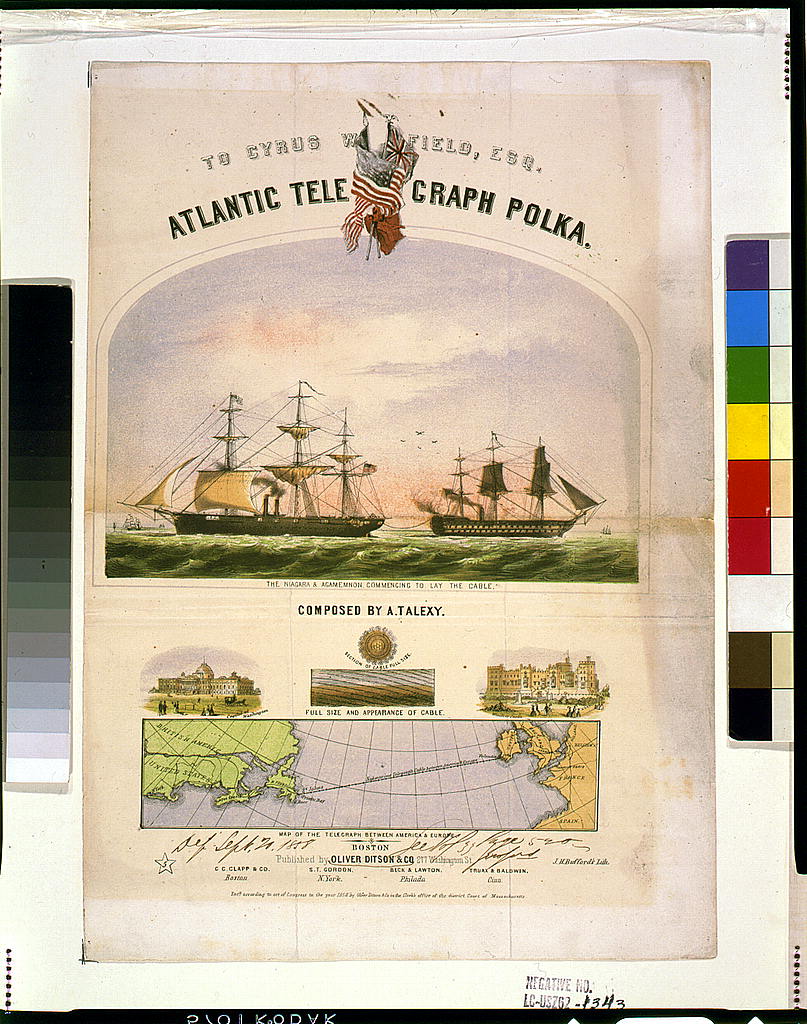
Atlantic telegraph cable print, 1858
Study the source before reading the analysis
The print celebrates the moment a cable physically linked distant communication systems. Global networks later changed speed and scale dramatically, but they still required shared technical standards, capital, maintenance, landing stations, operators, and rules governing access.
Which parts of the network are represented symbolically, and which workers and institutions disappear from the celebration?