Scientific, Philosophical, and Political Developments
New knowledge gained authority through instruments, mathematics, experiments, print, academies, and argument. Enlightenment writers applied criticism to law, economy, religion, and government, while salons, reading publics, rulers, and reformers selected which ideas circulated and which changes became policy.
- Exam weight
- 10–15%
- Topics
- 7
- Visual studies
- 4
How did new methods of knowledge gain political and social force?
Instruments, mathematics, experiments, correspondence, and academies changed standards for selected natural claims.
Print, salons, societies, and public authors circulated criticism through unequal and censored audiences.
Administrators and rulers adopted selected legal, economic, and health reforms while preserving hierarchy and political control.
How the changes connect
- New methods generate contestable claims
- Institutions certify and circulate knowledge
- Public criticism reaches officials and reformers
- Selective implementation turns ideas into policy
Compare the cases
| Case | How it worked | What made it distinct |
|---|---|---|
| Scientific inquiry | Observation, mathematics, instruments | Claims tested through networks |
| Enlightenment public | Print, salons, correspondence | Criticism with unequal access |
| Enlightened rule | Administrative and legal reform | Utility without surrendered sovereignty |
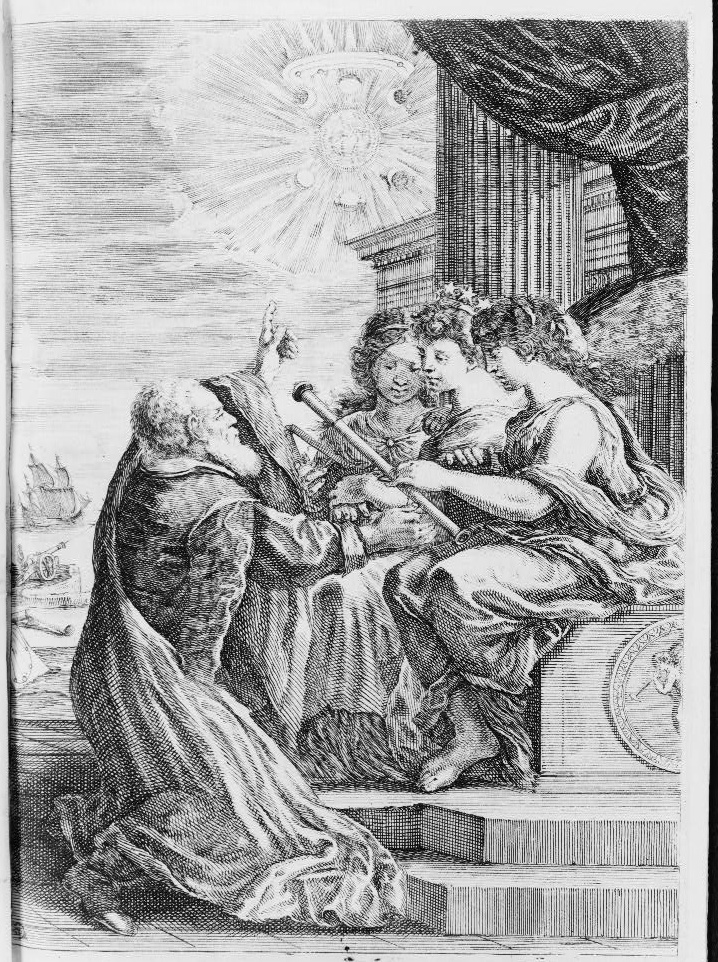
Read the chapter image
Which parts describe observation, and which parts persuade an audience to value Galileo’s discoveries?
Contextualizing the Scientific Revolution and the Enlightenment
Which older institutions and new networks made sustained challenges to inherited knowledge possible?
Scientific and philosophical change grew within Renaissance textual criticism, universities, churches, courts, practical crafts, navigation, print, and patronage. These institutions could support inquiry, police it, or do both, so the story is not science replacing religion in one break.
Scholars compared manuscripts, languages, and ancient authorities, exposing disagreement and training readers to evaluate how a text had been transmitted. Textual method made inherited authority open to historical criticism. Mapmaking, astronomy, anatomy, mining, surveying, clocks, lenses, and seafaring generated observations and technical problems that older books did not settle. Practical craft and instruments supplied evidence as well as ideas.
Academies and the Republic of Letters circulated reports, repeated demonstrations, assigned credit, and contested claims across political borders. Communities made selected observations durable and public. Sustained challenges to inherited knowledge became possible when humanist comparison and practical observation entered print, correspondence, patronage, and institutions capable of testing claims.
Evidence worth keeping
Know what each example demonstrates, not only its name.
Humanist criticism
- What happened
- Scholars compared manuscripts, languages, and ancient authorities, exposing disagreement and training readers to evaluate how a text had been transmitted.
- What it proves
- Textual method made inherited authority open to historical criticism.
- Use it for
- Choose Humanist criticism when you need concrete support rather than another general statement. Describe the development in one sentence and spend the next sentence on the link: Textual method made inherited authority open to historical criticism. The comparison with Instruments and navigation can show whether that mechanism was isolated or repeated.
- Do not overclaim
- Humanist criticism shows that Textual method made inherited authority open to historical criticism. It remains one bounded example and cannot represent every region or group.
Instruments and navigation
- What happened
- Mapmaking, astronomy, anatomy, mining, surveying, clocks, lenses, and seafaring generated observations and technical problems that older books did not settle.
- What it proves
- Practical craft and instruments supplied evidence as well as ideas.
- Use it for
- Compare Instruments and navigation with Humanist criticism and explain why the shared measure matters.
- Do not overclaim
- Instruments and navigation shows that Practical craft and instruments supplied evidence as well as ideas. It remains one bounded example and cannot represent every region or group.
Societies, correspondence, and print
- What happened
- Academies and the Republic of Letters circulated reports, repeated demonstrations, assigned credit, and contested claims across political borders.
- What it proves
- Communities made selected observations durable and public.
- Use it for
- Use Societies, correspondence, and print to define how far the claim reaches. Give its date, place, and affected group before explaining the boundary. It can qualify Humanist criticism and Instruments and navigation because communities made selected observations durable and public. This supports a precise “although” clause instead of a universal statement.
- Do not overclaim
- Societies, correspondence, and print shows that Communities made selected observations durable and public. It remains one bounded example and cannot represent every region or group.
Use on the exam
Sustained challenges to inherited knowledge became possible when humanist comparison and practical observation entered print, correspondence, patronage, and institutions capable of testing claims.
Do not use a lone-genius sequence or claim a fully formed modern scientific method appeared at once.
Bottom line: Build the paragraph around the relationship between Humanist criticism and Instruments and navigation; use Societies, correspondence, and print to qualify how widely the explanation applies. The evidence sequence matters. Let Humanist criticism establish the problem, Instruments and navigation show the operative mechanism, and Societies, correspondence, and print supply the most defensible qualification. End by naming the actor whose choices carried the mechanism forward or blocked it.