Industrial Capitalism and the Gilded Age
Railroads, corporations, new technology, and abundant labor created national industrial markets. Growth produced fortunes and cheaper goods while intensifying labor conflict, western dispossession, urban inequality, migration, and arguments over government responsibility.
- Exam weight
- 10–17%
- Topics
- 14
- Visual studies
- 4
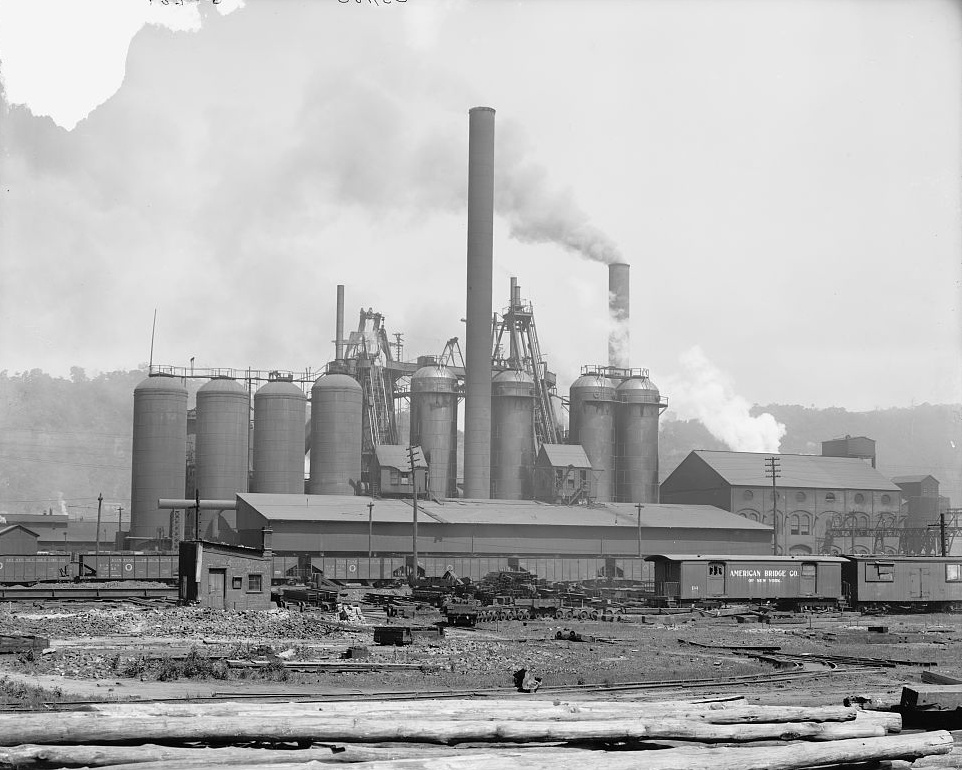
How did national industrial markets redistribute power?
Federal policy and private capital integrated western land, railroads, factories, and cities.
Corporations coordinated production while workers and migrants faced new dependencies.
Reform and regulation began, but courts and force often protected property and racial hierarchy.
How the changes connect
- Public policy opens land and transport
- Corporations concentrate coordination
- Migration supplies labor and cities
- Conflict produces organization and limited regulation
Compare the cases
| Case | How it worked | What made it distinct |
|---|---|---|
| Corporation | Managerial and financial scale | Concentrated ownership |
| Union | Collective bargaining and reform | Fragmented by labor markets and repression |
| Government | Subsidy, courts, regulation | Not a neutral observer |
Read the chapter image
Which systems had to operate together for production at this scale, and where might conflict emerge?
Contextualizing Period 6
How did the Civil War settlement create conditions for industrial expansion?
Federal authority, continental railroads, western land policy, mass migration, finance, and new technology connected markets while Reconstruction’s retreat left racial and regional inequalities intact.
Transcontinental and regional lines linked farms, mines, cities, and ports. Infrastructure created national markets and corporate power. Homestead, railroad grants, and military action transferred western land into settler and corporate use. Government actively structured supposedly private development.
Immigrants, internal migrants, and displaced rural workers supplied expanding labor markets. Industrial growth depended on mobility and unequal bargaining power. Postwar growth came from public policy and private capital working together across land, transportation, technology, and labor.
Evidence worth keeping
Know what each example demonstrates, not only its name.
Railroad network
- What happened
- Transcontinental and regional lines linked farms, mines, cities, and ports.
- What it proves
- Infrastructure created national markets and corporate power.
- Use it for
- Use Railroad network as direct support for the topic’s main relationship. Begin with the action or policy, name the people or institution making the choice, and then explain the result: Infrastructure created national markets and corporate power. Pair it with Federal land policy if the prompt asks you to weigh more than one cause.
- Do not overclaim
- Railroad network shows that Infrastructure created national markets and corporate power. It remains one bounded example and cannot represent every region or group.
Federal land policy
- What happened
- Homestead, railroad grants, and military action transferred western land into settler and corporate use.
- What it proves
- Government actively structured supposedly private development.
- Use it for
- Use Federal land policy as the second piece of evidence in a paragraph built around Railroad network. Compare the actors, institution, and outcome rather than the names of the events. That structure lets the evidence support a defensible inference: Government actively structured supposedly private development.
- Do not overclaim
- Federal land policy shows that Government actively structured supposedly private development. It remains one bounded example and cannot represent every region or group.
Labor migration
- What happened
- Immigrants, internal migrants, and displaced rural workers supplied expanding labor markets.
- What it proves
- Industrial growth depended on mobility and unequal bargaining power.
- Use it for
- Bring in Labor migration after the main claim is established. Its job is not to reverse the argument automatically, but to identify the group, region, or condition for which the pattern worked differently. Use it to show that industrial growth depended on mobility and unequal bargaining power.
- Do not overclaim
- Labor migration shows that Industrial growth depended on mobility and unequal bargaining power. It remains one bounded example and cannot represent every region or group.
Use on the exam
Postwar growth came from public policy and private capital working together across land, transportation, technology, and labor.
Do not describe the Gilded Age as laissez-faire without examining subsidies, courts, tariffs, and force.
Bottom line: Build the paragraph around the relationship between Railroad network and Federal land policy; use Labor migration to qualify how widely the explanation applies. The evidence sequence matters. Let Railroad network establish the problem, Federal land policy show the operative mechanism, and Labor migration supply the most defensible qualification. End by naming the actor whose choices carried the mechanism forward or blocked it.