Land-Based Empires
Gunpowder helped empires expand, but weapons alone could not hold diverse territories. Durable rule depended on taxes, bureaucrats, military elites, local intermediaries, public display, and negotiated religious policy.
- Exam weight
- 12–15%
- Topics
- 4
- Visual studies
- 4
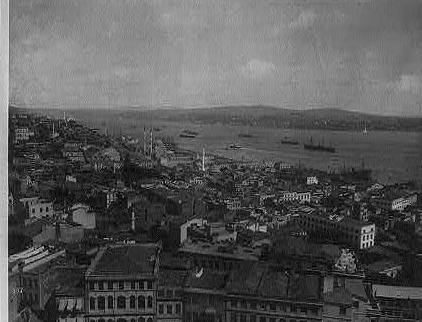
What turned early modern conquest into durable imperial rule?
Firearms and artillery altered the balance of power, but “they had guns” is an incomplete explanation. Ottoman, Safavid, Mughal, Qing, Russian, and Tokugawa rulers needed revenue systems, loyal military forces, officials, and strategies for managing diverse populations. Gunpowder helps explain how states defeated rivals and fortified cities; fiscal and administrative capacity explains why some conquests lasted.
Rulers also faced a loyalty problem. They could not personally supervise every province, noble, or military commander. Different empires answered with recruited or dependent service elites, land-revenue assignments, bureaucratic appointments, court attendance, and systems that balanced central and regional power. The details vary, but the comparison is productive: rulers tried to prevent armed elites from becoming independent rivals while still relying on them to govern.
Legitimacy completed the system. Dynasties patronized mosques, temples, art, scholarship, gardens, and monumental capitals; some promoted a religious identity, while others used accommodation to govern plural populations. These policies were never just “tolerance” or “intolerance.” Ask what political problem a policy addressed, which group gained influence, and how the policy changed under later rulers.
How the changes connect
- Gunpowder and armies make expansion possible
- Tax and land systems sustain soldiers and courts
- Officials and service elites transmit central commands
- Religion, art, and ceremony turn force into legitimacy
Compare the cases
| Case | How it worked | What made it distinct |
|---|---|---|
| Ottoman | Janissaries, provincial administration, imperial Islamic patronage | Strategic position joined Europe, Asia, and the Mediterranean |
| Safavid | Shi’a identity and military reorganization | Religious distinction sharpened rivalry with Ottomans |
| Mughal | Revenue administration and negotiation with diverse elites | Policy toward religious diversity changed by ruler and period |
Read the chapter image
What features suggest wealth, strategic control, or public authority? What additional evidence would you need to connect them to a specific ruler?
Empires Expand
Why did gunpowder help rulers conquer territory without guaranteeing durable empires?
Ottoman, Safavid, Mughal, and other land empires used firearms, cavalry, and siege artillery to conquer territory. The Ottomans captured Constantinople; the Safavids consolidated Iran; Babur’s forces founded Mughal rule in northern India. Russia and Qing China also expanded across large continental frontiers.
Gunpowder altered the cost of attacking walls and confronting older military elites, but expansion still required recruitment, supply, and revenue. Ottoman, Safavid, Mughal, Russian, Qing, and Tokugawa states combined weapons with cavalry, infantry, fortifications, diplomacy, and local alliances. Treat firearms as one part of a military-fiscal system.
Why one cannon is not an empire: Artillery can open a city gate, but soldiers must be paid and fed, occupied territory must be taxed, and rivals must be prevented from regrouping. Victories endure only when an administration turns temporary battlefield advantage into repeatable control.
Evidence worth keeping
Know what each example demonstrates, not only its name.
Siege artillery
- What happened
- Large cannons made some older fortifications more vulnerable and helped states such as the Ottomans capture defended cities, including Constantinople in 1453. Artillery required metalworking, powder, trained crews, transport animals, and reliable supply.
- What it proves
- Gunpowder favored rulers able to finance and coordinate expensive military systems, not merely those who possessed a weapon.
- Use it for
- Military technology, state capacity, or causation in imperial expansion.
- Do not overclaim
- Artillery did not make walls irrelevant; fortification design changed, and sieges still depended on logistics and manpower.
Ottoman, Safavid, and Mughal expansion
- What happened
- These dynasties used firearms and artillery alongside cavalry, infantry, alliances, and revenue systems. Ottoman janissaries, Safavid tribal forces, and Mughal armies developed in different political and religious settings despite sharing some military technologies.
- What it proves
- Similar weapons can support different imperial systems because recruitment, finance, geography, and rivals differ.
- Use it for
- Comparison among land empires or qualification of the “gunpowder empire” label.
- Do not overclaim
- Do not describe the three states as interchangeable Muslim empires or attribute every victory to guns.
Russian and Qing territorial growth
- What happened
- Russian rulers expanded across Siberia using firearms, forts, tribute demands, and mobile frontier forces. Qing armies combined Manchu organization, gunpowder weapons, diplomacy, and campaigns into Central Asia, creating a large multiethnic empire.
- What it proves
- Land-empire expansion was not confined to the Ottoman-Safavid-Mughal region and often relied on frontier administration as much as battle.
- Use it for
- Global comparison of empire building or the role of geography in expansion.
- Do not overclaim
- Expansion did not mean uniform control; frontier peoples negotiated, resisted, and sometimes retained considerable autonomy.
Use on the exam
Gunpowder altered siege warfare, but empires expanded durably only when rulers could tax, recruit, supply armies, and administer the territories that weapons helped them conquer.
“Gunpowder empire” explains part of conquest, not every cause of success or decline.
Bottom line: Cannons can breach a wall; revenue and institutions determine what happens afterward.
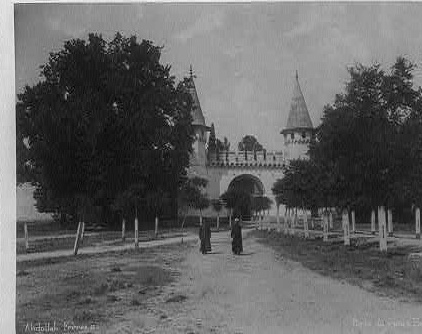 Visual study 02
1880–1893 photograph of an Ottoman imperial entrance
Study the source before reading the analysis
The approach to an imperial palace organizes who can move toward the ruler and on what terms. The photograph is late Ottoman, so it preserves a space associated with rule rather than documenting its sixteenth-century use.
How do distance, framing, and the narrow entrance turn movement into a political experience?