Revolutions
New claims about rights and sovereignty challenged dynastic rule while fossil-fueled industry reorganized production. Political and industrial revolutions shared language of change but distributed power and benefits unevenly.
- Exam weight
- 12–15%
- Topics
- 10
- Visual studies
- 4
Why did industrial and political revolutions cluster after 1750, and whom did they actually empower?
Enlightenment writers challenged inherited authority with arguments about reason, rights, sovereignty, and political representation, but ideas became revolutionary only when groups applied them in specific crises. Colonial grievances, fiscal strain, social hierarchy, war, and state weakness helped turn political language into rebellion. Atlantic revolutions influenced one another, yet each produced different coalitions, conflicts, and limits.
Industrialization also came from a system, not a single machine. Britain combined accessible coal, capital, commercial networks, agricultural change, labor supply, property institutions, and expanding markets. Steam power loosened the geographic limit of waterpower; mechanization reorganized production; rail and steam transport reduced time and cost. Other states industrialized through different mixtures of private enterprise and state direction.
Output grew, but the social bargain changed. Factory discipline, urbanization, unsafe labor, new middle classes, and wage dependence produced both opportunity and hardship. Workers formed unions and political movements; reformers attacked slavery and unequal legal status; nationalism redrew belonging around the nation. Liberalism, socialism, nationalism, and feminism were not interchangeable answers—they identified different problems and different holders of rights.
How the changes connect
- Intellectual criticism challenges old authority
- War and fiscal or social crisis create openings
- Industrial systems increase output and urban wage labor
- New classes and movements demand political or social change
Compare the cases
| Case | How it worked | What made it distinct |
|---|---|---|
| Liberalism | Individual rights, constitutional government, markets | Often limited the political nation by class, race, or gender |
| Nationalism | Political community defined through shared national identity | Could unify states or fracture empires |
| Socialism | Critique of unequal ownership and industrial class relations | Ranged from reform programs to revolutionary theories |
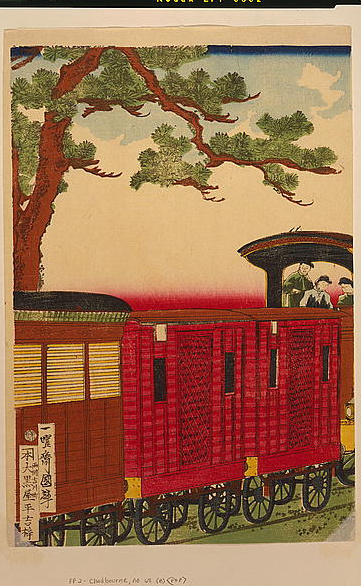
Read the chapter image
What is technologically new in the scene, and what suggests that industrialization was being interpreted through an existing cultural lens?
The Enlightenment
How did Enlightenment ideas make inherited political authority easier to challenge?
Thinkers applied reason and natural-law arguments to government and society. Locke emphasized natural rights and government by consent; Montesquieu analyzed separated powers; Rousseau centered popular sovereignty. These ideas circulated through print and salons, while critics extended rights arguments to slavery and women.
The Enlightenment changed political argument by relocating authority. Instead of assuming that rank and tradition justified rule, writers asked whether government protected rights, represented a social contract, or served the public good. Print culture and sociable spaces helped ideas circulate, but readers selected and adapted them to local disputes.
Ideas need a carrier and a crisis: A pamphlet about popular sovereignty becomes politically explosive when readers already face taxation, exclusion, or weak representation. The idea provides language and legitimacy; the crisis creates urgency and a coalition willing to act. Neither component fully explains revolution alone.
Evidence worth keeping
Know what each example demonstrates, not only its name.
Natural rights
- What happened
- Thinkers associated with the Enlightenment argued that people possessed rights by nature rather than by permission from a ruler. Political writers used rights language to judge government according to whether it protected life, liberty, property, conscience, or other basic claims.
- What it proves
- Rights provided a standard outside tradition by which subjects could call a government unjust.
- Use it for
- Intellectual causes of revolution or analysis of a political declaration.
- Do not overclaim
- Writers disagreed over which rights existed and often excluded women, enslaved people, laborers, or colonized populations from equal application.
The social contract
- What happened
- Contract theories treated government as an arrangement created to serve a political community. Although Hobbes, Locke, Rousseau, and others reached different conclusions, they shifted debate toward consent, obligations, and what people could do when rulers violated the agreement.
- What it proves
- Political authority could be analyzed as conditional rather than permanently guaranteed by birth or divine inheritance.
- Use it for
- Legitimacy, popular sovereignty, or comparison among revolutionary constitutions.
- Do not overclaim
- There was no single Enlightenment contract theory, and some versions defended stronger government than others.
Print and public discussion
- What happened
- Books, pamphlets, newspapers, salons, coffeehouses, and correspondence helped arguments circulate among literate audiences. Readers connected abstract ideas to immediate conflicts over taxation, censorship, representation, religion, and privilege.
- What it proves
- Ideas become politically effective when communication networks connect them to existing grievances and organized groups.
- Use it for
- Causation linking intellectual change to political mobilization.
- Do not overclaim
- Literacy and access were unequal, and print alone did not produce revolution without crisis, leadership, and collective action.
Use on the exam
Enlightenment arguments weakened inherited authority by defining rights and consent as standards for government, but fiscal crisis and organized opposition turned those ideas into revolutionary action.
The Enlightenment did not instantly create democracy or equal rights.
Bottom line: Ideas supplied a language of challenge; political and economic crises supplied the opening.